SCHD Dividend Cut of -2.7% Yet Yield Holds at 3.25%: Dividend Stabilit

SCHD Dividend Cut of -2.7% Yet Yield Holds at 3.25%: Dividend Stabilit

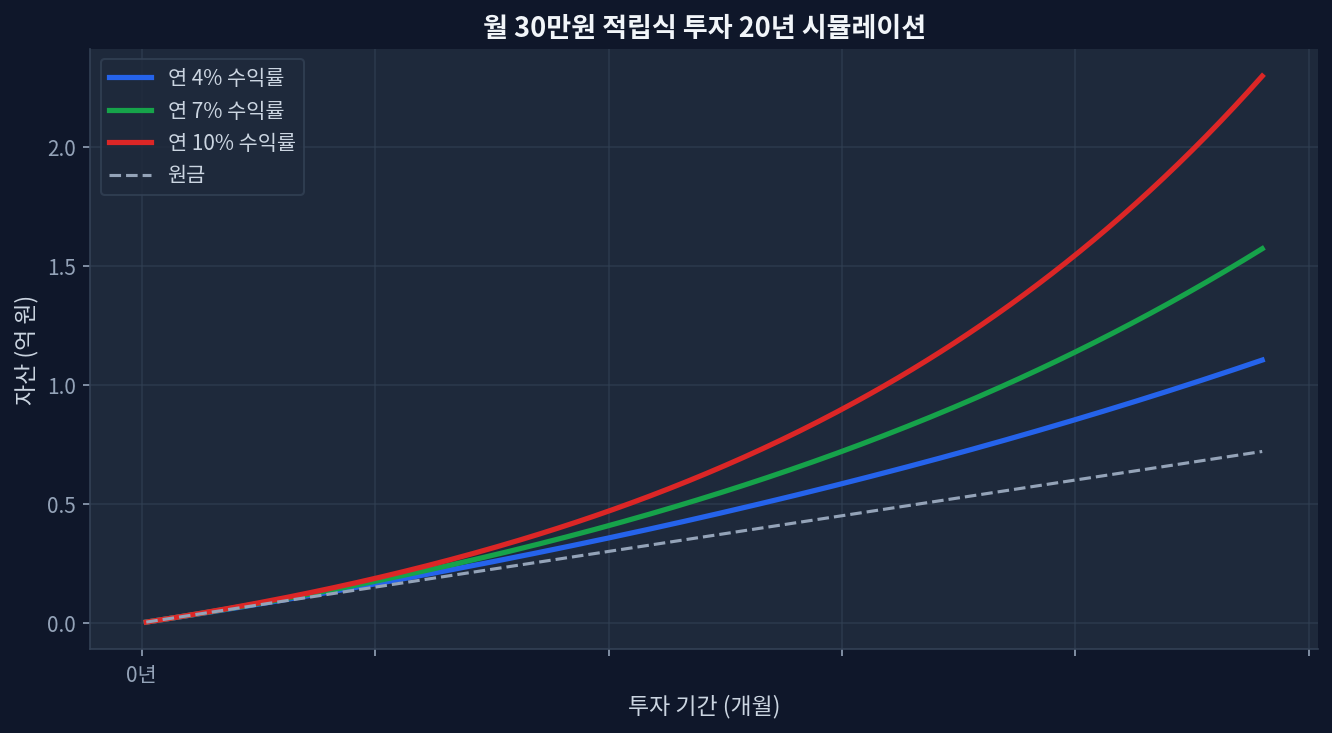
SCHD Dividend Cut of -2.7% Yet Yield Holds at 3.25%: Dividend Stability Through Market Cycles Monthly $30K investment 20-year compound growth simulation SCHD quarterly dividend: $0.2530, down 2.7% year-over-year Dividend yield: Still 3.25% — 2.2x higher than VIG's 1.47% 1-year total return: +26.5% (dividends plus capital appreciation) Current valuation: P/E 18.8, moderate level; trading near 85.7% of 52-week high Assets under management: $94.9B — scale supporting dividend stability The Dividend Cut That Does Not Signal Weakness 20-year monthly investment accumulation with dividend reinvestment Schwab US Dividend Equity ETF (SCHD) announced its quarterly dividend at $0.2530, representing a 2.7% decrease versus the same quarter in 2024 when it paid $0.2600. On its surface, this reads negative—dividends were reduced, after all. ...
June 30, 2026 · InvestIQs Research
Structuring a Late-Stage Retirement Portfolio: Analyzing SCHD's Dividend Efficacy for Investors in Their 50s

Structuring a Late-Stage Retirement Portfolio: Analyzing SCHD's Dividend Efficacy for Investors in Their 50s

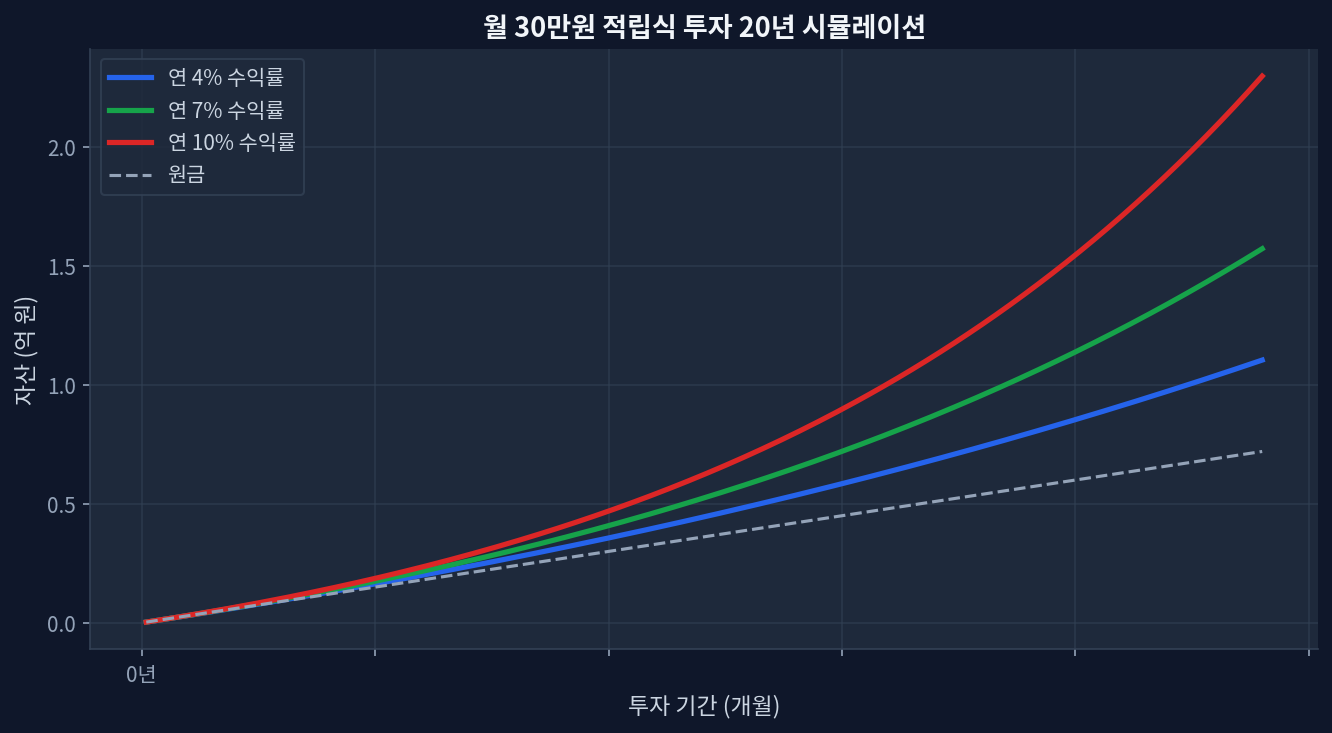
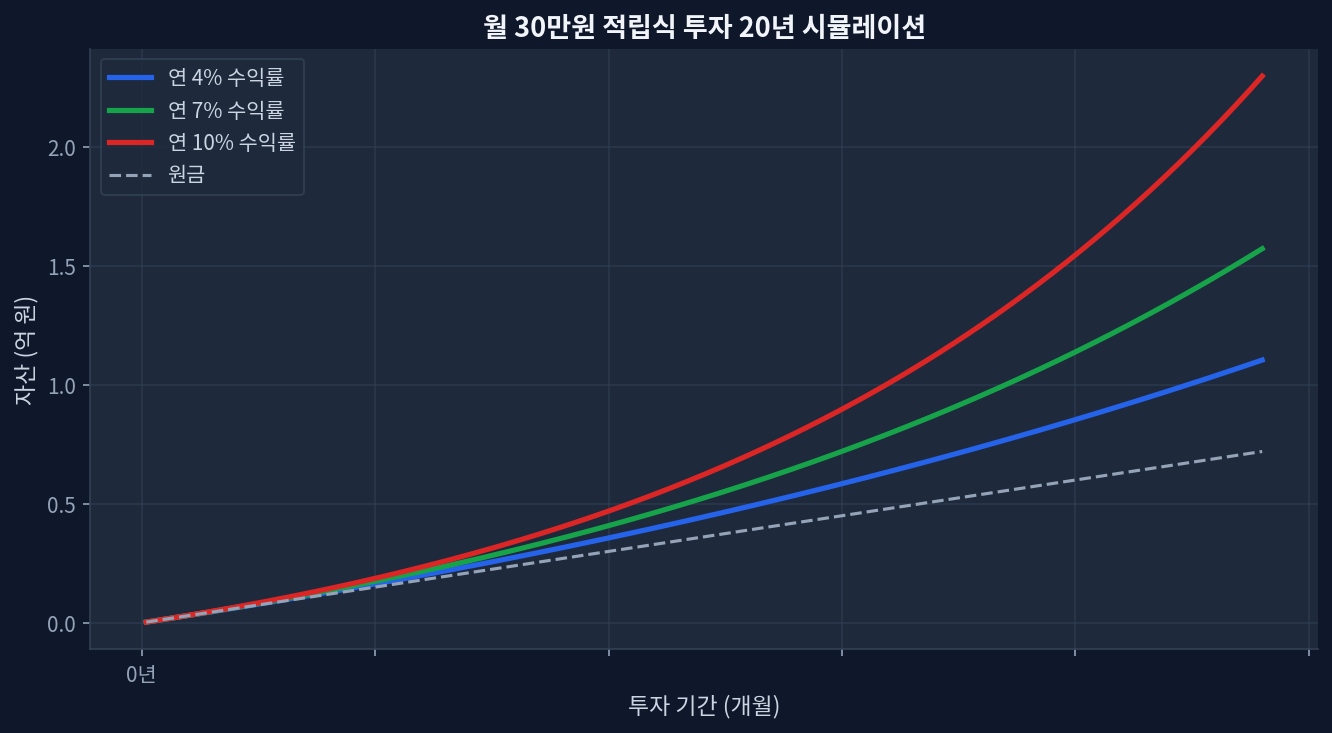
SCHD currently yields 3.21% trading at a 19.5 P/E, presenting a distinct valuation discount against VIG's 1.48% yield and 26.2 P/E. Trailing 5-year data shows VIG (+66.4%) outpacing SCHD (+53.7%), highlighting the persistent growth versus yield tradeoff in modern asset allocation. Short-term momentum favors SCHD, which posted a +31.3% 1-year return, driving the asset to 99.1% of its 52-week range ($32.83). Relying solely on historical dividend growth can lead to an incomplete risk assessment, requiring explicit modeling of market drawdowns and shifting rate environments. Redefining Yield and Growth in the Accumulation Phase Monthly $30K investment 20-year compound growth simulation Observing the chart below, which illustrates a 20-year monthly accumulation simulation, the trajectory of compound growth at varying rates highlights the mathematical reality of long-term investing. For demographic cohorts entering their 50s—similar to the target audience of late-stage planning frameworks—the capital accumulation runway compresses significantly. This structural reality shifts the analytical priority away from maximizing top-line beta exposure toward sequence-of-returns protection and generating reliable cash flow. ...

May 25, 2026 · InvestIQs Research
20-Year DRIP Reinvestment Simulation: Risk Data vs. Consensus Assumptions

20-Year DRIP Reinvestment Simulation: Risk Data vs. Consensus Assumptions

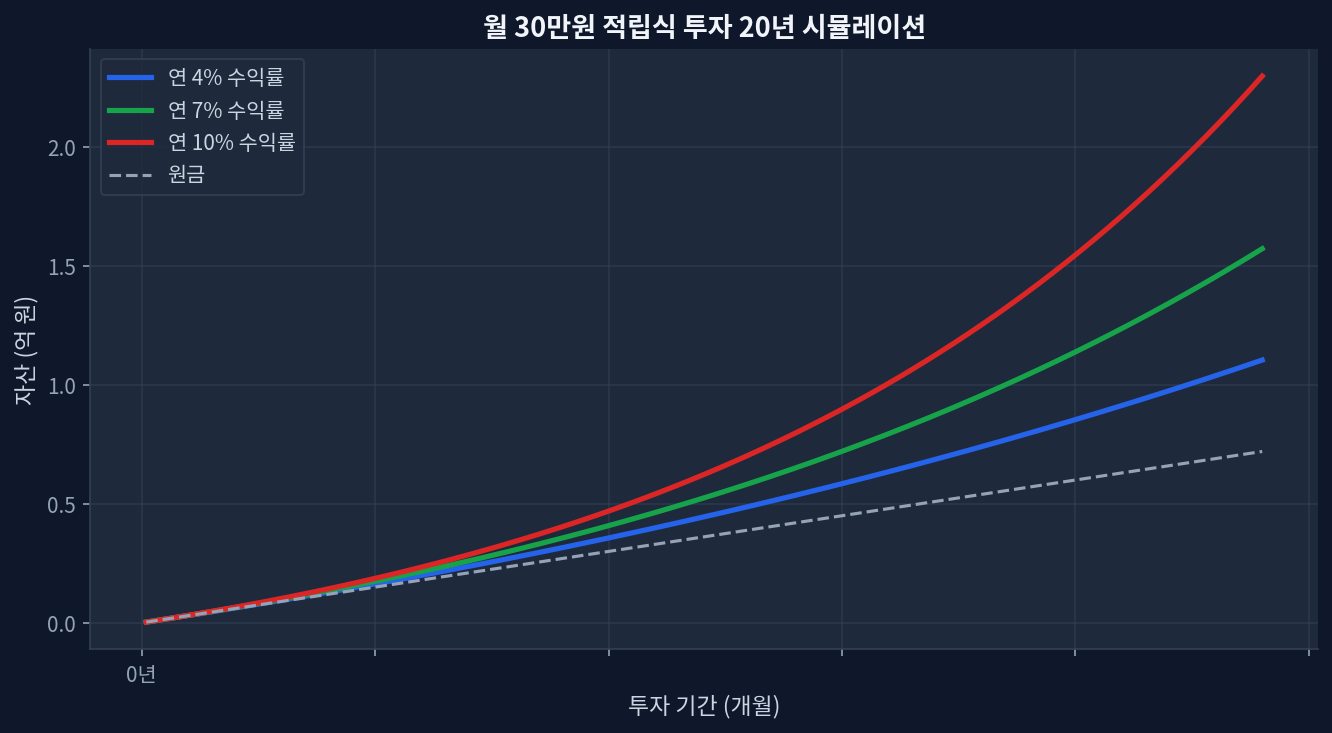
$1,500/month at 7% DRIP CAGR over 20 years = ~$782K; at 4%, ~$550K — a $232K gap driven entirely by the assumed return rateEvery 1% shift in assumed return adds or removes ~$110K–$130K in terminal value at year 20; sensitivity is nonlinearTax drag in taxable accounts reduces effective reinvestment yield by 15–25%; account type is a primary, not secondary, variable2020 S&P dividend cuts (~14% aggregate quarterly reduction) pushed realized DRIP rates 200bps below model assumptions for high-yield ETFsDRIP reinvestors during the Q1 2020 drawdown outperformed non-reinvestors by 12–18% by year-end — a volatility effect flat-line models ignore entirely What the 20-Year Simulation Data Actually Shows Monthly $30K investment 20-year compound growth simulation Running $1,500/month at 4%, 7%, and 10% for 20 years produces a divergence that widens sharply in the back half of the period. At year 10, the gap between the 4% and 10% paths is roughly $200K. By year 20, that gap exceeds $590K. The simulation chart above captures the inflection clearly: the 10% curve breaks away from the 4% path around year 12, when accumulated DRIP dividends begin compounding on themselves at scale.[FRED] ...

May 17, 2026 · InvestIQs Research
SCHD Dividend Growth CAGR: Yield Decomposition Across 10 Years

SCHD Dividend Growth CAGR: Yield Decomposition Across 10 Years

SCHD current yield 3.29% at $31.8 — 94.9% of 52W range ($25.69–$32.13), not a distressed-entry scenario1Y return +27.0%; 5Y cumulative +47.1% — dividends contributed ~3.3 pts, price drove the restVIG 5Y return +61.9% outpaces SCHD by 14.8 pts — the yield premium has a total-return costSCHD P/E 18.9 vs VIG 26.8 — value tilt is real but concentrated in rate-sensitive sectorsAUM $91.1B, avg daily volume 23M shares — liquidity not a constraint at any allocation size SCHD trades at $31.8, sitting at 94.9% of its 52-week range. For yield-maximizers, that positioning matters: buying near highs compresses starting yield and extends the payback window on any drawdown. The real question is not entry timing — it is whether the dividend growth engine underneath compounds fast enough to justify that cost. ...

May 15, 2026 · InvestIQs Research
JEPQ Quarterly Dividend Increase Analysis: Evaluating Returns and Volatility Risk for High-Yield ETFs

JEPQ Quarterly Dividend Increase Analysis: Evaluating Returns and Volatility Risk for High-Yield ETFs

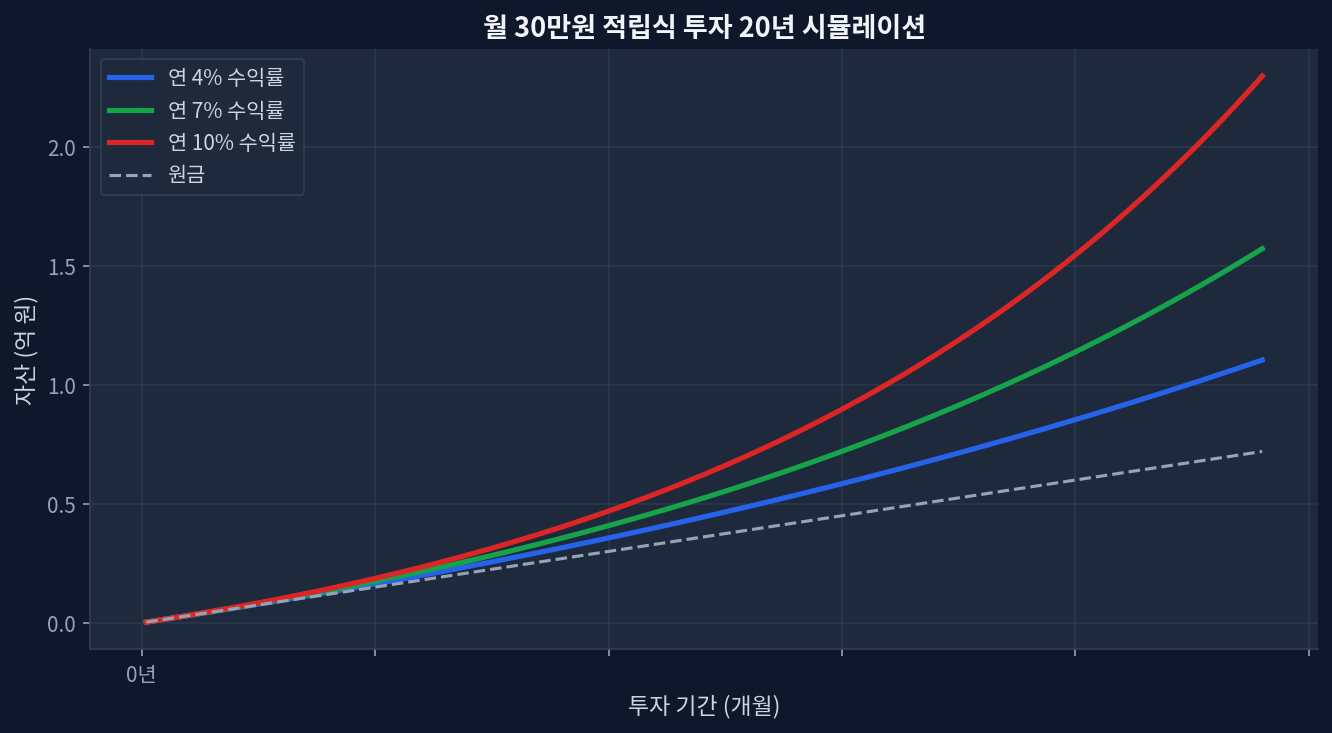
JEPQ's recent quarterly dividend was $0.5910 per share, marking a 2.6% increase year-over-year. JEPQ has shown strong short- to medium-term performance with a 1-year return of +27.4% and a 3-year cumulative return of +79.1%, closely tied to the volatility of its underlying asset, the Nasdaq 100 index. Its current dividend yield is 10.35%, but this largely depends on option premium income due to the nature of the covered call strategy, implying inherent dividend variability based on market conditions. Comparative analysis with JEPI shows JEPQ recording higher returns and dividend yields, attributable to differing exposure to technology-driven growth momentum. The attractive yields of high-dividend covered call ETFs come with risks, including vulnerability to price declines during market downturns and the potential for unexpected dividend cuts. JEPQ Quarterly Dividend Announcement Analysis: Returns and Volatility Perspective Monthly $30K investment 20-year compound growth simulation 20-Year Compound Growth Simulation of Monthly Dollar-Cost Averaging JEPQ recently announced a quarterly dividend of $0.5910 per share, drawing investor attention. This 2.6% year-over-year increase underscores the appeal of covered call ETFs that pursue both growth and income. Currently, JEPQ’s share price stands at $59.66, with a dividend yield of 10.35%, an attractive figure for those seeking high-yield investments. However, a deeper analysis is warranted regarding the stock price volatility accompanying such high dividend yields and the sustainability of these returns. ...

May 13, 2026