SCHD Dividend Cut -2.7% Maintains 3.25% Yield: Strategic Positioning B

SCHD Dividend Cut -2.7% Maintains 3.25% Yield: Strategic Positioning B

SCHD Quarterly Dividend Cut -2.7% Maintains 3.25% Yield: Strategic Positioning Beyond the Headline Monthly $30K investment 20-year compound growth simulation SCHD quarterly dividend: $0.2530, down -2.7% year-over-year Dividend yield: Still 3.25% — 2.2x higher than VIG's 1.47% 1-year total return: +26.5% (dividends plus price appreciation) Current valuation: P/E 18.8 reflects moderate pricing; near 52-week high at 85.7% percentile Assets under management: $94.9B — scale supporting dividend stability Dividend Reduction: Why It Does Not Signal Distress 20-Year Compounding Simulation: Monthly Dollar-Cost Averaging Strategy Schwab US Dividend Equity ETF (SCHD) announced a quarterly dividend of $0.2530, representing a -2.7% reduction from $0.2600 in the same quarter of 2024. On surface-level headlines, this reads negative — dividends declined. ...
July 2, 2026 · InvestIQs Research
SCHD Quarterly Dividend Cut 2.7%, Yet 3.25% Yield Persists: Why the Ma

SCHD Quarterly Dividend Cut 2.7%, Yet 3.25% Yield Persists: Why the Ma

SCHD Quarterly Dividend Cut 2.7%, Yet 3.25% Yield Persists: Why the Market Narrative Misses the Point Monthly $30K investment 20-year compound growth simulation SCHD quarterly dividend: $0.2530, down 2.7% year-over-year Dividend yield: Still 3.25% — 2.2x higher than VIG at 1.47% One-year total return: +26.5% (dividend plus capital appreciation) Current valuation: P/E 18.8, moderate territory, currently trading 85.7% into the 52-week range Assets under management: $94.9B — scale that underpins distribution stability Dividend Cut, Yet Surprisingly Resilient Schwab US Dividend Equity ETF (SCHD) announced a quarterly distribution of $0.2530—down 2.7% from the same period last year at $0.2600. On the surface, a contraction in cash flow. Dividend was trimmed, so the narrative should be negative. ...

July 1, 2026 · InvestIQs Research
SCHD Cuts Quarterly Dividend 2.7% Yet Holds 3.25% Yield: What the Numb

SCHD Cuts Quarterly Dividend 2.7% Yet Holds 3.25% Yield: What the Numb

SCHD quarterly dividend: $0.2530, down 2.7% year-over-year Dividend yield: 3.25% — 2.2× higher than VIG's 1.47% 1-year total return: +26.5% (dividends + price appreciation) Current valuation: P/E 18.8 (moderate), near 52-week high at 85.7% AUM: $94.9B — asset base supports dividend stability Dividend Cut, Yet No Signal of Distress Monthly $30K investment 20-year compound growth simulation Schwab US Dividend Equity ETF (SCHD) announced a quarterly dividend of $0.2530. This represents a 2.7% decline versus the same quarter in 2024, which paid $0.2600 [Schwab]. On the surface, this reads negative—a dividend reduction. ...

June 28, 2026 · InvestIQs Research
Samsung Dividend Reinvestment: Path to 8% Annual Returns Over 5 Years

Samsung Dividend Reinvestment: Path to 8% Annual Returns Over 5 Years

Key TakeawaysSamsung's historical dividend yield averaged 3.2–4.5% over 2020–2026; combined with share-price appreciation, 8% annualized return requires steady market conditionsMonthly $1,500 reinvestment compounds differently across tax-advantaged (Roth/401k) vs. taxable accounts—15% US tax treaty on Korean dividends applies in taxable onlyCurrency risk: KRW/USD volatility can erase 2–3% of gains in down years; hedging costs further reduce net returnsDiscipline matters most—missing dividend reinvestment windows or trading on emotion derails the 8% target more than stock selectionFive-year timeframe is short for equity positions; drawdowns of 20–30% during market corrections are normal and must be endured What 8% Annual Returns Actually Means for Samsung Investors Monthly $30K investment 20-year compound growth simulation Achieving 8% annualized returns on Samsung Electronics over five years requires three moving parts to align: dividend income, share price appreciation, and reinvestment discipline. Most retail investors focus only on the dividend (the visible 3.5% yield) and ignore the harder half—growth and compounding. Samsung’s stock price, denominated in Korean Won, adds an extra layer of complexity: FX exposure can boost returns in strong dollar periods or shred them when the Won appreciates. The math looks clean on a spreadsheet; the reality is messier. ...

June 27, 2026 · InvestIQs Research
SCHD Quarterly Dividend Cut 2.7% but Yield Holds at 3.25%: Why Dividen

SCHD Quarterly Dividend Cut 2.7% but Yield Holds at 3.25%: Why Dividen

SCHD Quarterly Dividend Cut 2.7% but Yield Holds at 3.25%: Why Dividend Stability Matters More Than Headlines Monthly $30K investment 20-year compound growth simulation SCHD quarterly dividend: $0.2530, down 2.7% year-over-year Dividend yield: Still 3.25% — 2.2x higher than VIG's 1.47% 1-year total return: +26.5% (dividends plus price appreciation) Current valuation: P/E 18.8, moderate range; near 85.7% of 52-week high Assets under management: $94.9B — scale that underpins dividend stability The Dividend Cut That Does Not Look Painful Schwab US Dividend Equity ETF (SCHD) announced a quarterly dividend of $0.2530, down from $0.2600 in the same quarter of 2024—a 2.7% decrease. On the surface, this is negative news. A dividend cut is a dividend cut. ...

June 26, 2026 · InvestIQs Research
SCHD in Tax-Free Accounts: Why 20-Year Compounding Beats 2M KRW in Annual Savings

SCHD in Tax-Free Accounts: Why 20-Year Compounding Beats 2M KRW in Annual Savings

SCHD's 3.25% yield — annualizing ~$10.5M USD in distributions across 94.9B AUM (Jan 2026)Tax-free growth over 20 years at 7% average return compounds to 3.87x initial investment, vs. 2.87x after taxes200만원 saved in year 1 becomes 650만원+ in tax-deferred gains by year 10 (no withdrawals)SCHD trades at 19.0 P/E, 480 bps below broader dividend-growth peer VIG (26.0 P/E)Catch: momentum risk is real — SCHD at 52-week high (90.4%), vulnerability to rate shocks and sector rotation The Compounding Angle: Why Simple Tax Savings Miss the Real Picture Monthly $30K investment 20-year compound growth simulation Tax-advantaged accounts create a deceptive math problem. Investors fixate on annual tax savings — 200만원 per year on a 2000만원 contribution — and miss the exponential tail. The real edge comes not from avoiding taxes today, but from letting tax-free dividends reinvest and compound for decades. ...

June 11, 2026 · InvestIQs Research
IRA Contribution Data: Analyzing the Trade-Off Between Tax Deductions and Liquidity Risk

IRA Contribution Data: Analyzing the Trade-Off Between Tax Deductions and Liquidity Risk

Introduction: The Trade-Off Between Tax Deferral and Liquidity Constraints Monthly $30K investment 20-year compound growth simulation Taxable, Traditional IRA, and Roth IRA tax effect comparison The data indicates an 85.4% return over 5 years. This suggests compounding is maximized over the long term, but it imposes strict liquidity constraints. Beyond analyzing tax exemptions, quantifying the opportunity cost of capital through data remains necessary. ...

May 22, 2026 · InvestIQs Research
SCHD Dividend Growth CAGR: Yield Decomposition Across 10 Years

SCHD Dividend Growth CAGR: Yield Decomposition Across 10 Years

SCHD current yield 3.29% at $31.8 — 94.9% of 52W range ($25.69–$32.13), not a distressed-entry scenario1Y return +27.0%; 5Y cumulative +47.1% — dividends contributed ~3.3 pts, price drove the restVIG 5Y return +61.9% outpaces SCHD by 14.8 pts — the yield premium has a total-return costSCHD P/E 18.9 vs VIG 26.8 — value tilt is real but concentrated in rate-sensitive sectorsAUM $91.1B, avg daily volume 23M shares — liquidity not a constraint at any allocation size SCHD trades at $31.8, sitting at 94.9% of its 52-week range. For yield-maximizers, that positioning matters: buying near highs compresses starting yield and extends the payback window on any drawdown. The real question is not entry timing — it is whether the dividend growth engine underneath compounds fast enough to justify that cost. ...

May 15, 2026 · InvestIQs Research
Korean Income Tax Filing Guide: The Dividend Threshold and IRP/ISA Tax Strategy

Korean Income Tax Filing Guide: The Dividend Threshold and IRP/ISA Tax Strategy

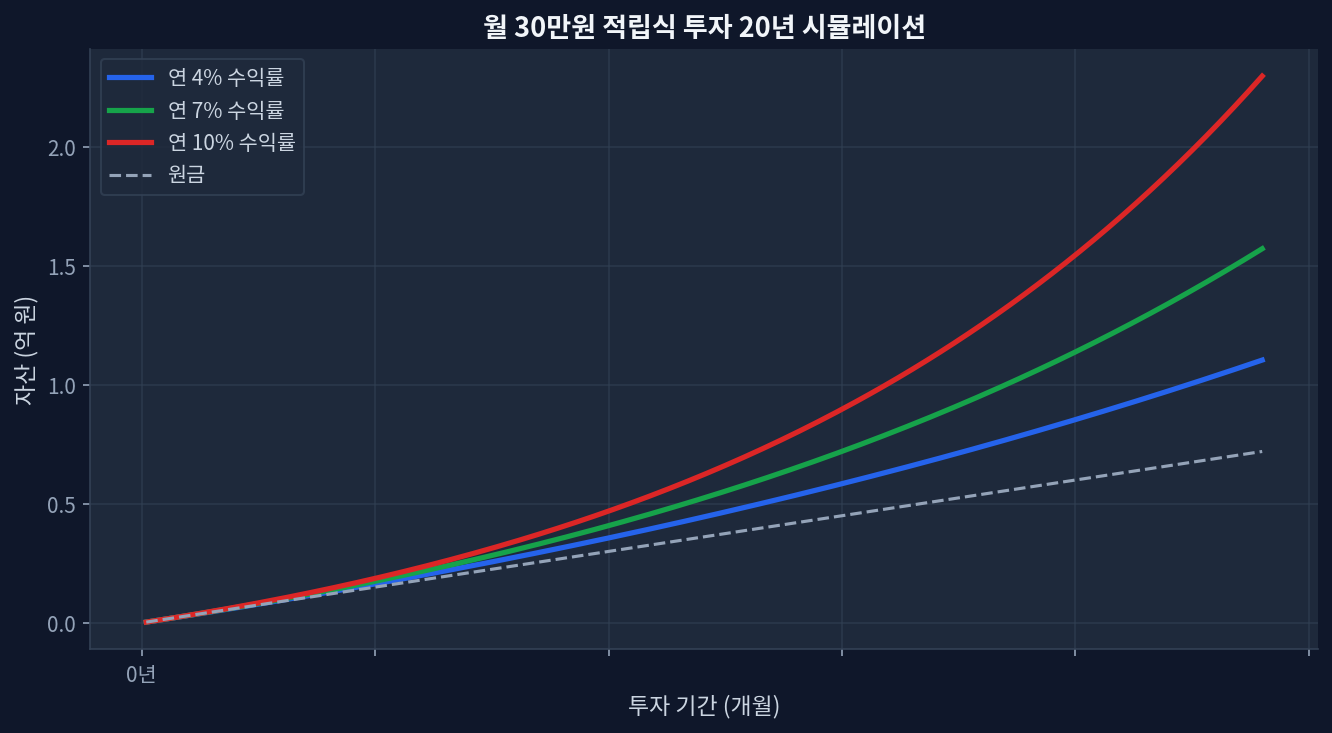
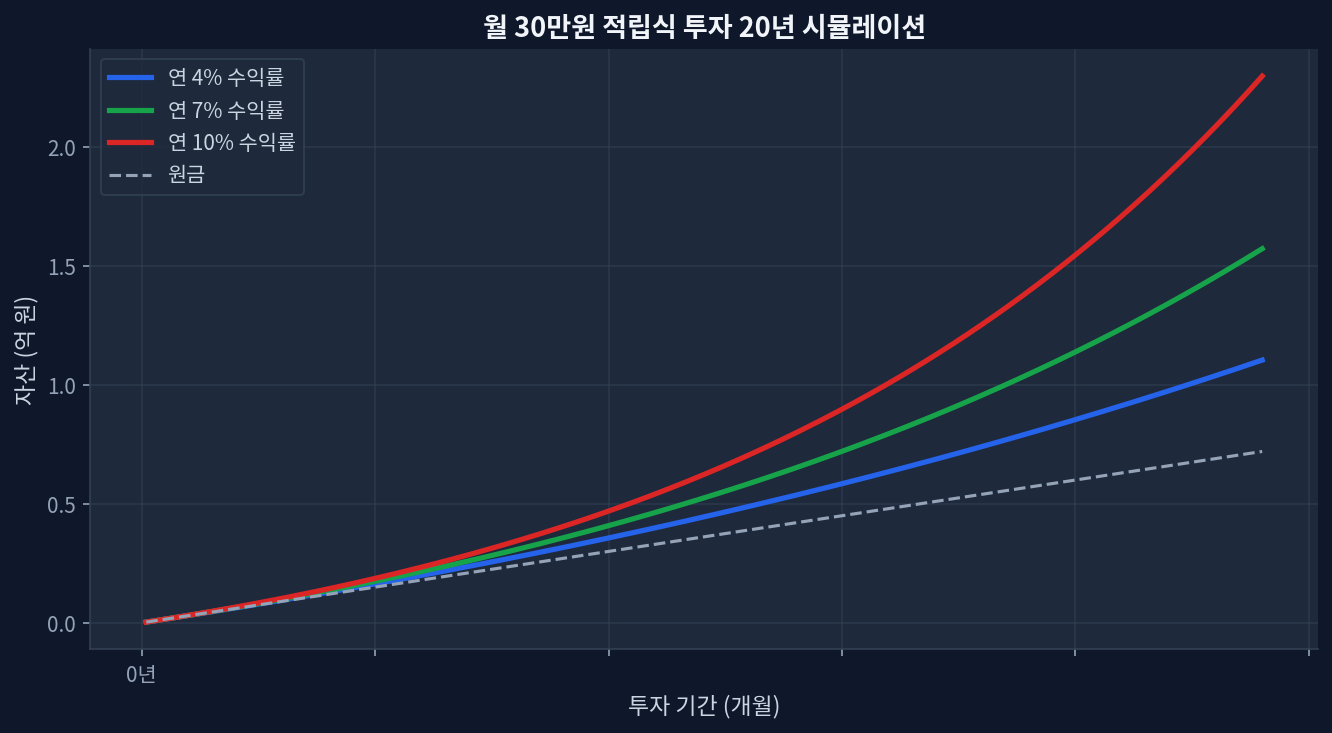
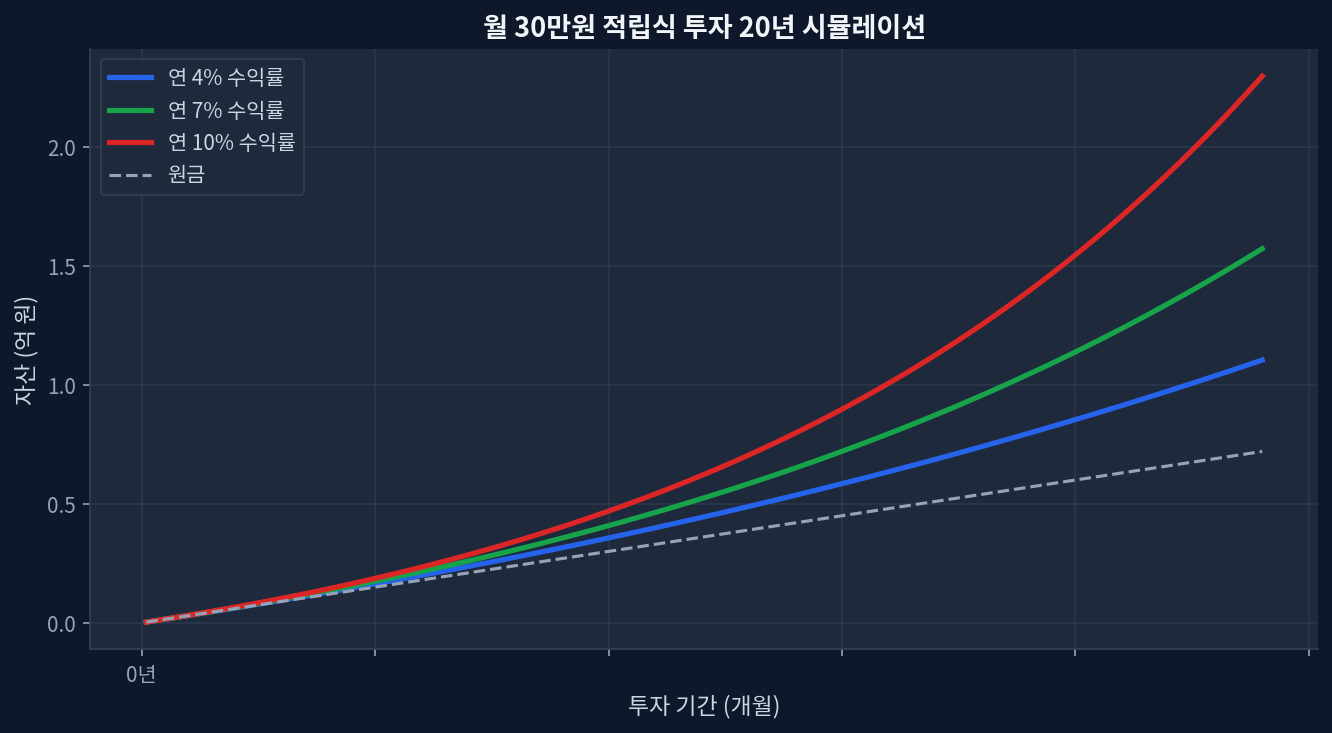
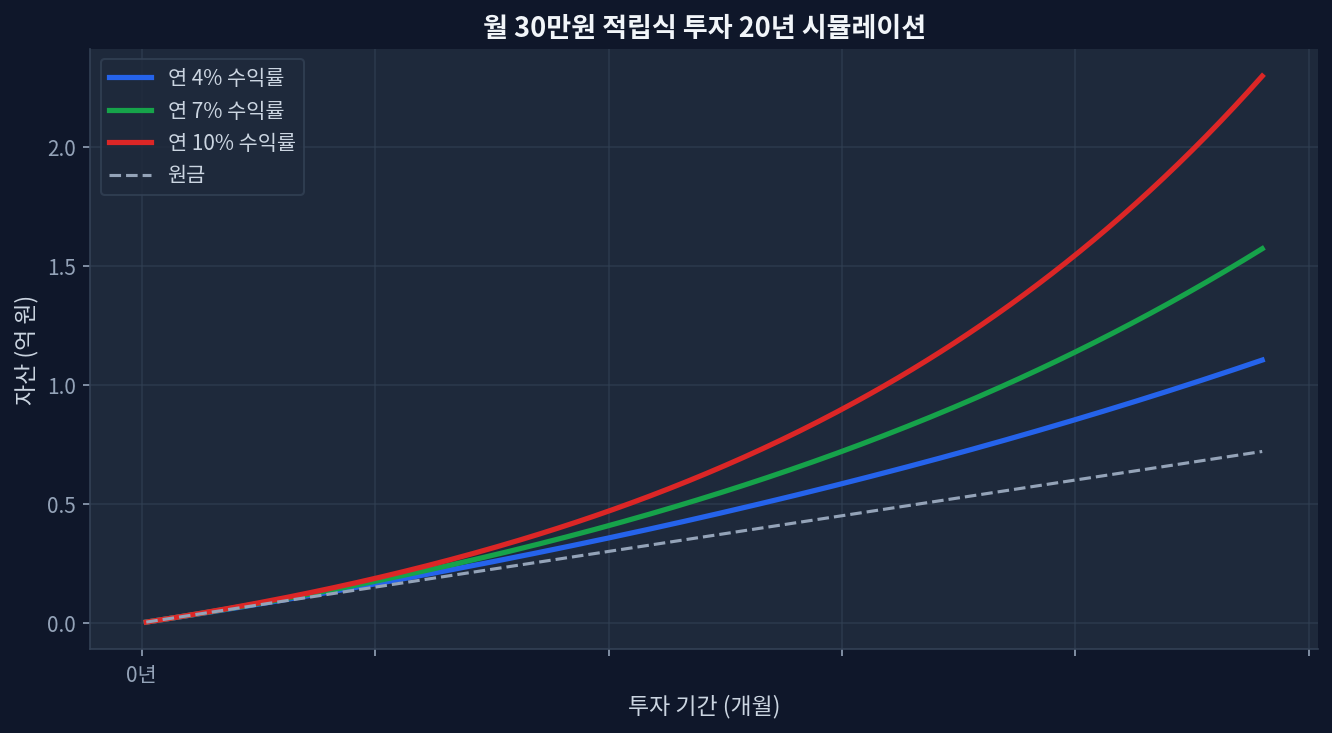
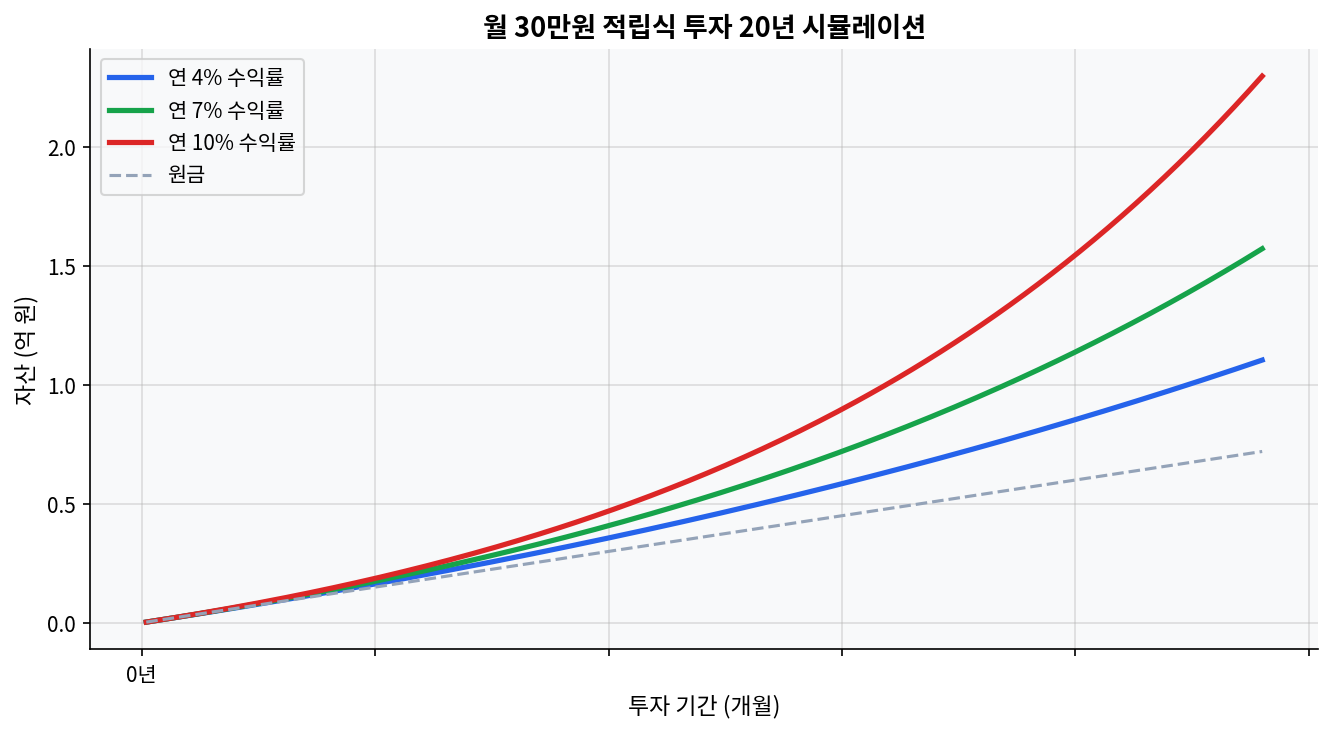
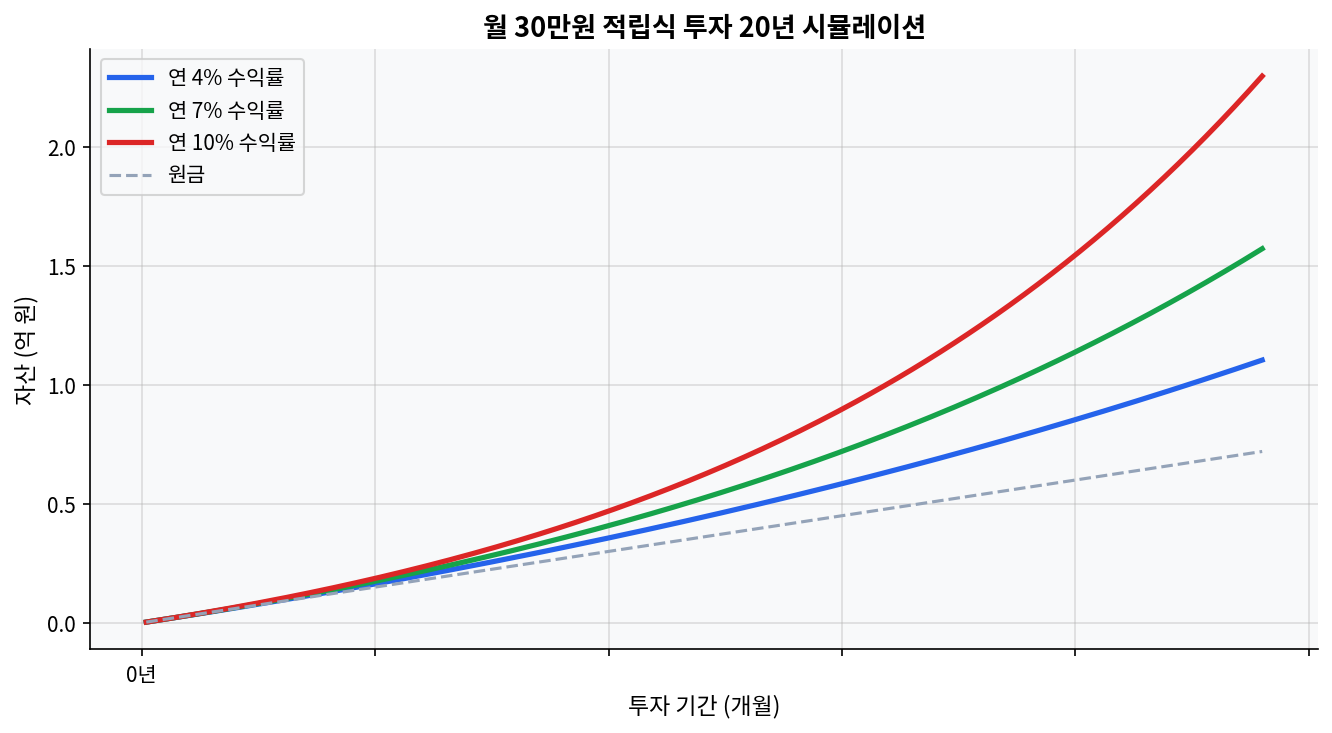
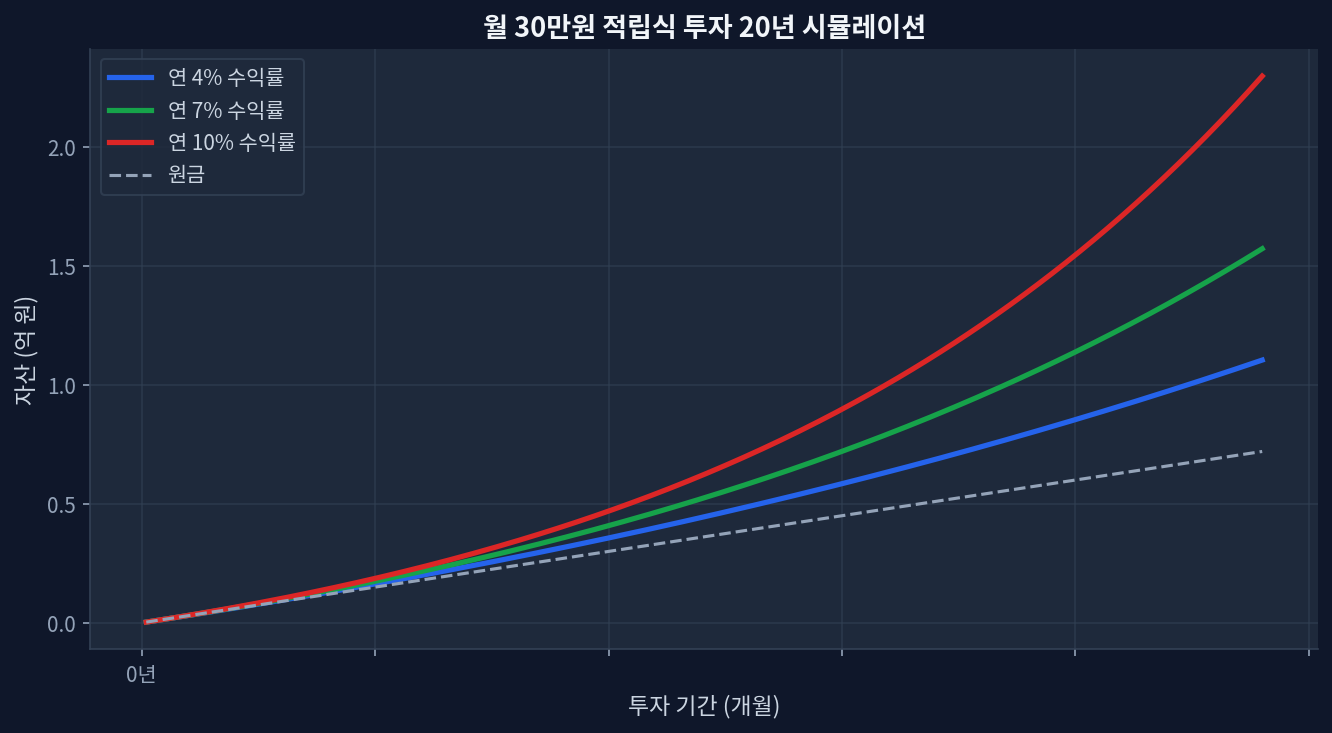
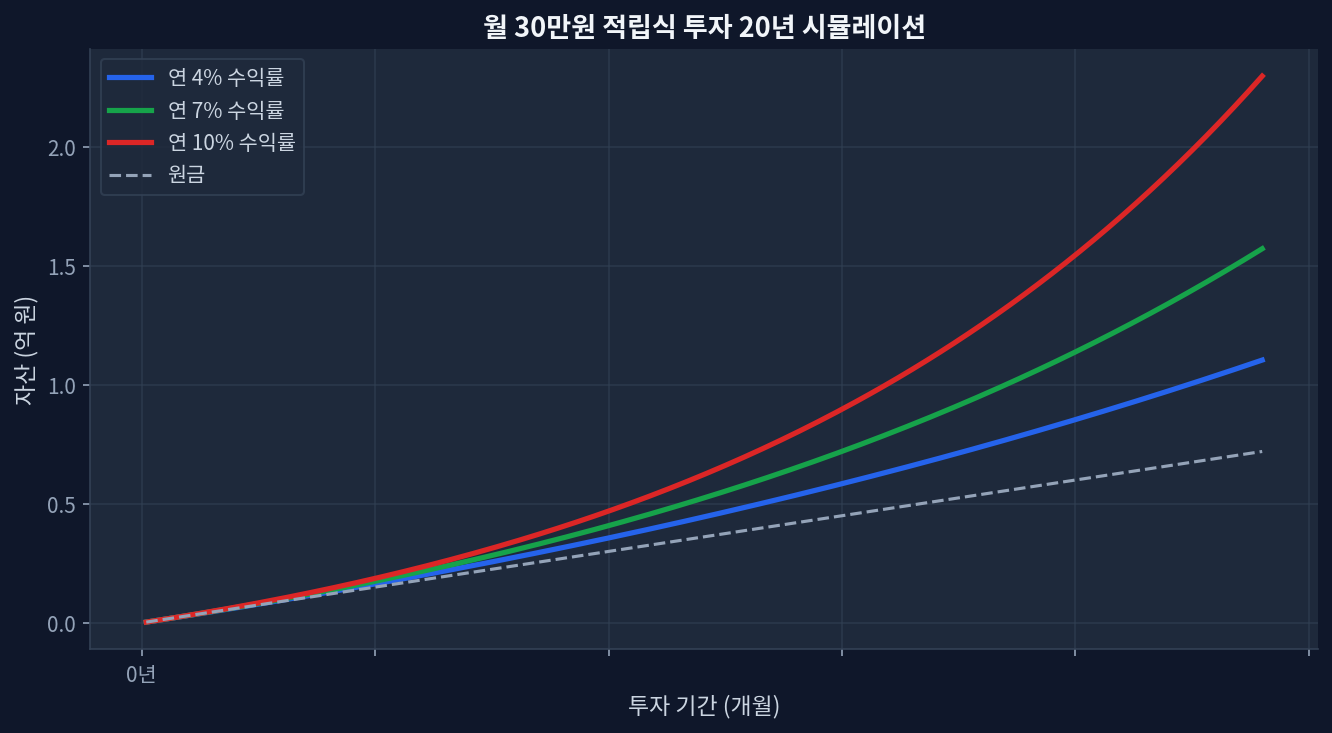
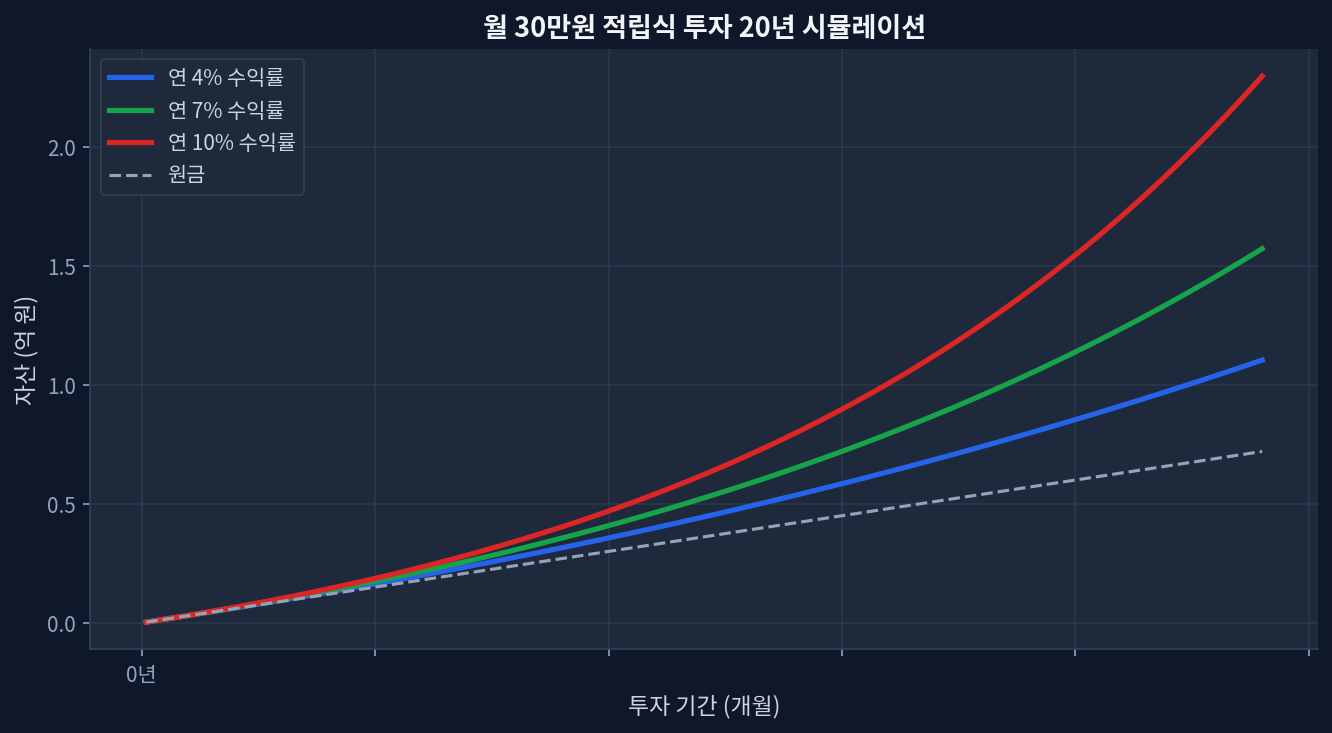
The statutory filing window for Korean comprehensive income tax runs from May 1 through May 31 of the following year, with weekends and public holidays rolling to the next business day. In 2026, May 31 falls on a Sunday, so filing and payment continue through June 1.Retirement account tax credits apply up to KRW 9 million, or about $6,500, at 15% for total compensation below KRW 55 million and 12% above that line. An IRP contribution of KRW 8.4 million, or about $6,100, can therefore generate a tax credit of KRW 1.26 million or KRW 1.008 million.When annual interest plus dividends exceed KRW 20 million, or about $14,500, the comprehensive taxation switch turns on. For US-listed ETFs such as VOO, SCHD, and DGRO, the account wrapper matters more than the ticker label.Failure-to-file penalties are 20%, underreporting penalties are 10%, and late-payment interest runs at 0.022% per day. Delay carries a measurable cost.Rolling ISA maturity proceeds into a retirement account can add 10% of the converted amount, up to KRW 3 million, or about $2,200, to retirement-account contribution creditable amounts. What the chart says first Monthly $30K investment 20-year compound growth simulation 20-year compound-growth simulation for a $220 monthly contribution The chart below shows how wide the gap becomes after 20 years when a $220 monthly contribution compounds at 4%, 7%, and 10%. In this range, compounding and contribution duration create larger numbers than tax optimization alone. Saving about $75 in tax may matter less than keeping the contribution schedule alive for one more year. ...

April 28, 2026
Expense Ratio Compounding: 0.03% vs 0.5% Over 30 Years

Expense Ratio Compounding: 0.03% vs 0.5% Over 30 Years

A 0.47 percentage-point fee gap means 6.97% net versus 6.50% net on a 7.00% gross-return assumption.With $1,500 invested monthly for 30 years, total contributions reach $540,000 and the projected ending balance is roughly $1.74 million at 0.03% versus $1.60 million at 0.50%.The spread is about $143,000, or roughly 8% of the lower-fee ending balance, before taxes and slippage.As of Apr. 15, 2026, VOO traded near $640.44 with a 1.11% dividend yield and a 27.19 P/E, while COWZ traded near $63.02 with a 2.05% yield and a 16.77 P/E.Over the latest 5-year window cited by providers, VOO was at 12.81% annualized, SPLG at 11.42%, and COWZ at 14.61%, showing that fee alone does not explain every outcome. The fee gap that looks small until time does the math Monthly investment 20-year compound growth simulation Expense ratio is one of those numbers that looks harmless in isolation. Three basis points. Fifty basis points. That sounds like rounding error. It is not. Vanguard’s own explanation is direct: the fee is pulled from fund returns, not billed separately. That matters because the deduction happens every year, on a balance that keeps changing. ...

April 25, 2026