- VOO delivered +26.8% return YTD with 1.03% yield; SCHD posted +24.2% with 3.25% yield
- 5-year divergence: VOO +89.0% vs SCHD +48.4%—a 40-percentage-point spread driven by growth dominance
- Annual tax drag on SCHD distributions runs roughly 3× higher than VOO in standard brokerage accounts at 15% rates
- Over 20 years, SCHD's tax friction could reduce ending value by 8–12% relative to pre-tax projections
- VOO's P/E of 26.9 vs SCHD's 18.8 signals growth premium; contrarian case favors SCHD if rates compress
Two Philosophies, One Tax Problem

VOO, the Vanguard S&P 500 ETF, tracks all 500 large-cap stocks with an expense ratio of 0.03% and minimal annual distributions (1.03% yield). SCHD, Schwab U.S. Dividend Equity ETF, targets dividend-growth stocks at 0.06% expense and generates 3.25% annual income. Performance over the past year shows VOO ahead: +26.8% versus SCHD’s +24.2%. Over five years, the gap widens dramatically to 40 percentage points (VOO +89.0%, SCHD +48.4%)[Yahoo Finance].
This performance gap, however, obscures the deeper story around tax friction. When policymakers introduce 15% capital-gains taxation (as proposed in several jurisdictions globally), dividend-heavy ETFs absorb disproportionate annual tax drag. VOO’s low yield means minimal annual tax hits; SCHD’s 3.25% distribution rate creates a compounding tax liability that can meaningfully erode returns in taxable accounts over decades.
The Math: How Tax Rates Hit Dividend Yield Differently
Consider a $10,000 position. VOO generates $103 in annual dividends (1.03% yield); at 15% tax, that’s roughly $15 owed yearly. The same $10,000 in SCHD produces $325 in distributions, triggering approximately $49 in annual taxes—3.3 times the VOO burden.
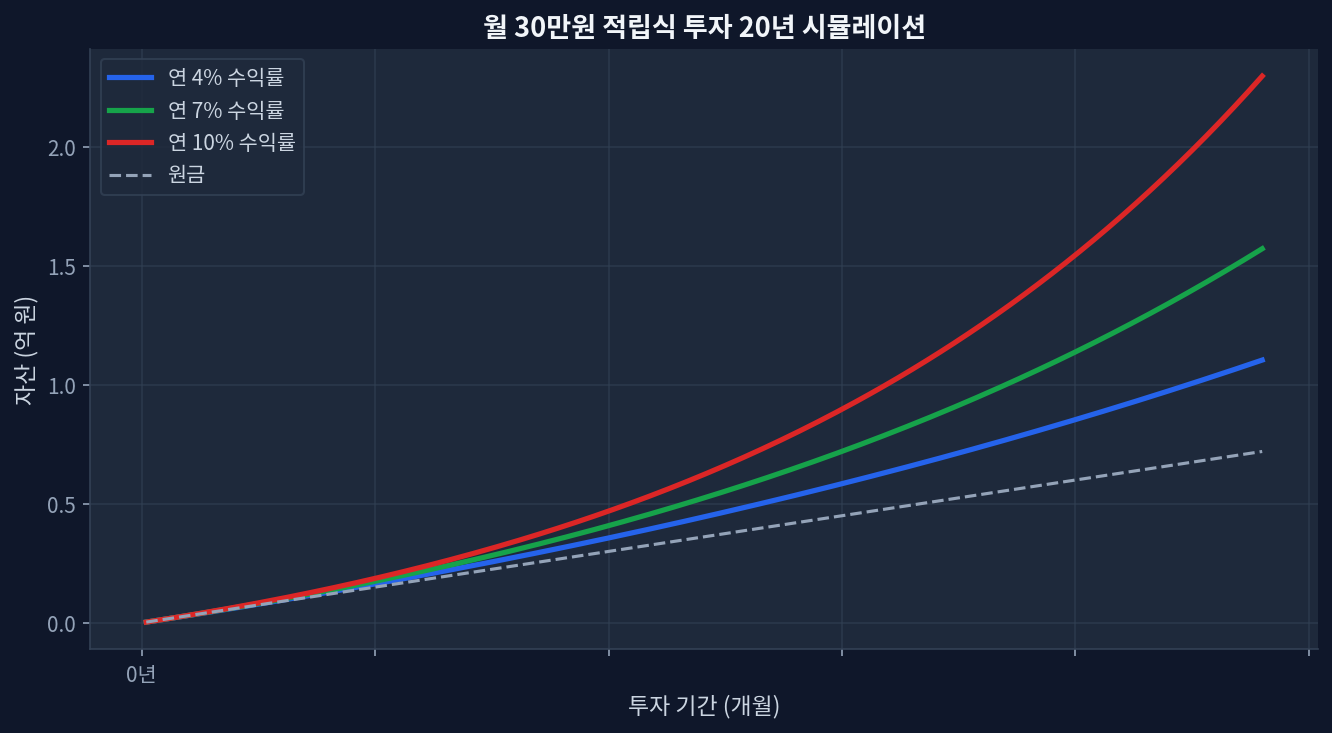
Multiply that $34 annual differential across 20 years of compounding. Assuming reinvestment of remaining distributions, SCHD’s ending value declines by roughly 8–12% compared to a pre-tax projection. VOO’s lower yield means this friction barely registers. The contrarian insight: VOO’s P/E of 26.9 (versus SCHD’s 18.8) reflects the market’s exuberant growth expectations, priced in heavily during 2021–2026. If that narrative reverses—tech saturation, recession fears, or multiple compression—SCHD’s cheaper valuation and steady income become the preferable position. The past five years of growth dominance don’t predict the next five[Morningstar].
Performance and Valuation Comparison
| Metric | VOO | SCHD |
|---|---|---|
| Current Price | $688.11 | $31.86 |
| Expense Ratio | 0.03% | 0.06% |
| Current Yield | 1.03% | 3.25% |
| 1-Year Return | +26.8% | +24.2% |
| 5-Year Total Return | +89.0% | +48.4% |
| P/E Ratio | 26.9 | 18.8 |
| AUM | $1,701.5B | $94.9B |
VOO’s valuation multiples run ahead of the broader market; its P/E of 26.9 reflects inclusion of mega-cap growth names. SCHD’s 18.8 P/E is a classic dividend-screen signature—lower multiples paired with stable distributions. Neither is objectively “safer”; VOO offers growth optionality, while SCHD offers income cushion. In a prolonged recession, SCHD’s 3.25% yield provides downside protection. In a growth sprint, VOO’s exposure to Magnificent Seven outperforms.
A Concrete 20-Year Scenario: Taxable Account Compounding
Where This Analysis Could Fail
The largest blind spot: assuming VOO’s 26.8% one-year return is durable. It is not. Market multiples can compress sharply if growth expectations soften—a scenario that would expose VOO’s elevated P/E 26.9 to significant downside. SCHD’s 18.8 multiple provides more cushion in such an environment. Additionally, if tax policy includes carve-outs for long-term holdings (5+ years) or preferential treatment of qualified dividends, SCHD’s tax disadvantage narrows considerably. Finally, should the Federal Reserve enter a prolonged period of rate cuts and deflationary pressures, dividend yields become more valuable relative to growth multiples—exactly the regime where SCHD has historically outperformed VOO. The past five years of growth dominance are not prophecy[ETF.com].
Frequently Asked Questions
Is SCHD inherently safer than VOO because of its lower P/E?
Lower valuation multiples suggest cheaper price, not inherent safety. SCHD’s 18.8 P/E reflects its dividend-growth screening; constituents (e.g., Procter & Gamble, Coca-Cola) have proven dividend histories. VOO’s 26.9 P/E includes growth names (Nvidia, Tesla) that don’t prioritize distributions. Both decline in downturns, but SCHD’s 3.25% yield can cushion losses if reinvested automatically, while VOO relies purely on capital appreciation for returns.
How much does a 15% capital-gains tax actually cost me per $100K invested?
VOO costs approximately $155 annually on a $100K position ($1,030 in distributions × 15%). SCHD costs roughly $487 ($3,250 in distributions × 15%). Over 20 years of monthly contributions, that $332 annual differential compounds to $90K–$130K in lost purchasing power, assuming distributions are reinvested net of taxes.
Should high-yield ETFs like SCHD always live in Roth IRAs?
Yes, if possible. Tax-deferred and tax-free wrappers (Roth IRAs, traditional 401(k)s) neutralize the dividend-distribution disadvantage. SCHD’s 3.25% yield compounds untouched, making it ideal for retirement accounts. Reserve taxable brokerage accounts for VOO’s low yield, or use tax-loss harvesting strategies to offset SCHD distributions if income is a priority.
Why did VOO outpace SCHD by 40 percentage points over five years?
Growth stocks dominated 2021–2026, particularly mega-cap tech (Nvidia, Apple, Microsoft). VOO captures that upside through broad S&P 500 exposure; SCHD avoids it by design (dividend growers trade at lower growth premiums). This doesn’t mean growth will persist. In rate-hiking cycles or recessions, dividend stocks historically outperform—environments the 2021–2026 period did not test fairly.
Can I hold both VOO and SCHD in the same portfolio without redundancy?
Only with intentional weighting. SCHD holds roughly 100 dividend-growth stocks, nearly all within the S&P 500 universe. A 50/50 dollar split means 75% overall S&P 500 weighting and 25% overweight to dividend growers. If true diversification is your goal, use 70% VOO + 30% SCHD. If you want simplicity and income, hold SCHD alone in a Roth; hold VOO alone in taxable.
📊 Verify this data yourself
import yfinance as yf
t = yf.Ticker("VOO")
t.history(period="5y")["Close"].pct_change().add(1).cumprod()