High-Yield ETF Trap Data Analysis: 5-Year Total Return and Volatility Risk of 8%+ Yield Assets

High-Yield ETF Trap Data Analysis: 5-Year Total Return and Volatility Risk of 8%+ Yield Assets

Yields exceeding 8% accelerate cash flow generation but introduce severe principal erosion risks.Measured by 5-year cumulative total return, broad market indices (S&P 500) severely outperformed high-yield option strategies.Volatility drag structurally degrades nominal returns over extended holding periods.This diverges from the market narrative on downside protection; ultra-high-yield assets offer no structural safe haven during broad drawdowns.Market volatility historically triggers retail asset rotation toward high-cash-flowing instruments. Double-digit distribution rates generate an optical illusion of stability....

May 20, 2026 · InvestIQs Research
Rethinking the 60/40 Portfolio: A 10-Year BND vs. TLT Allocation Analysis

Rethinking the 60/40 Portfolio: A 10-Year BND vs. TLT Allocation Analysis

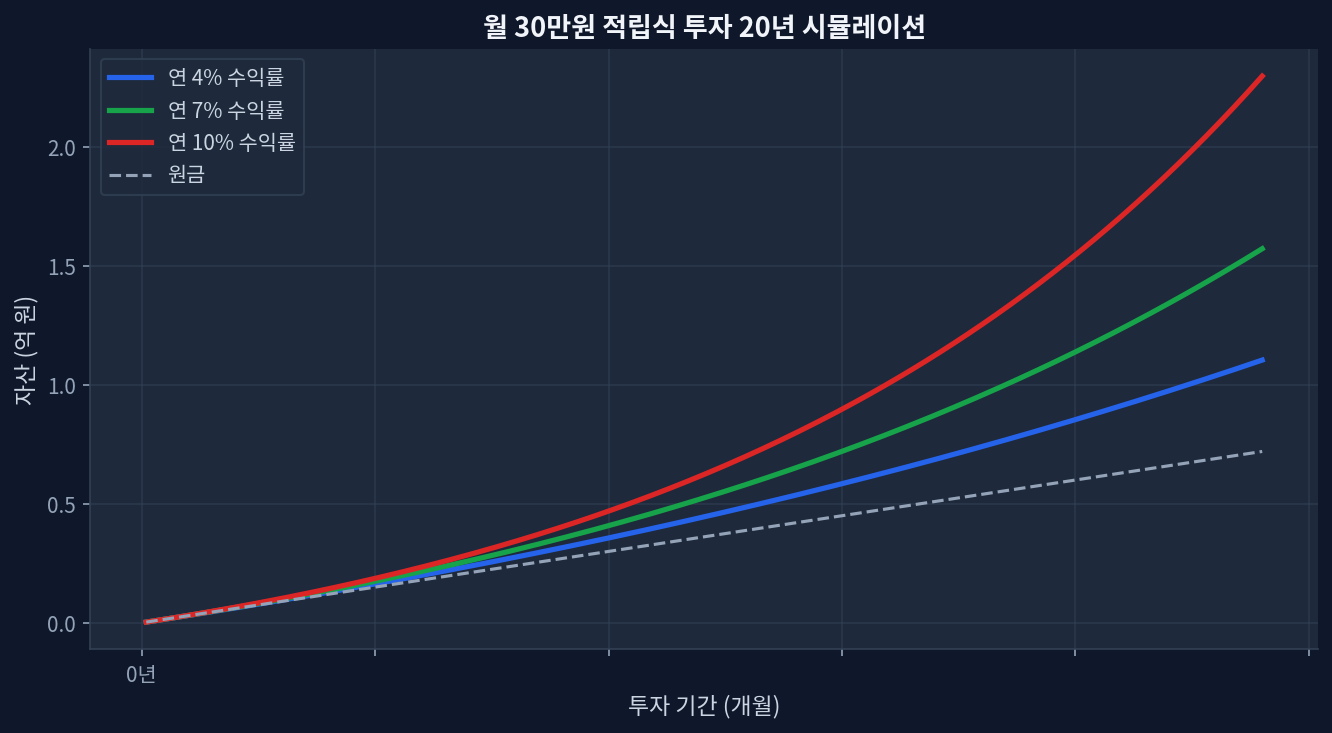
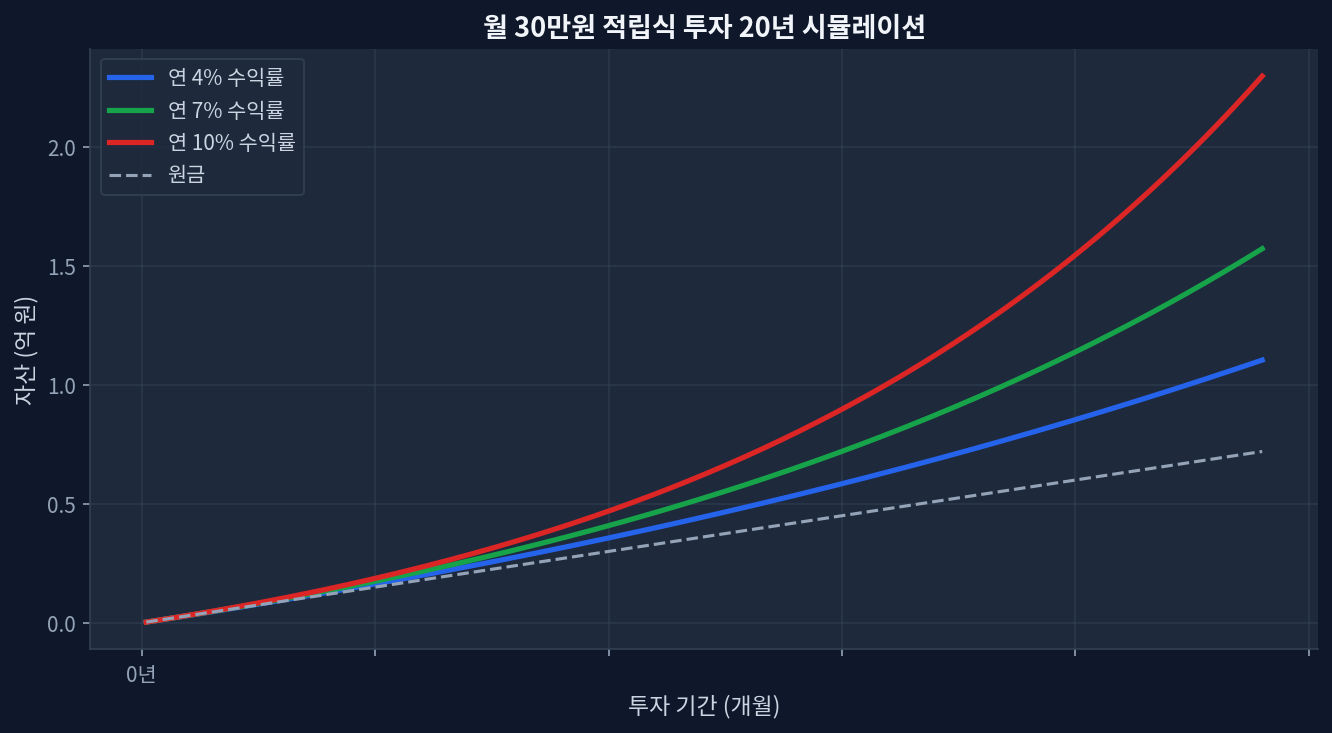
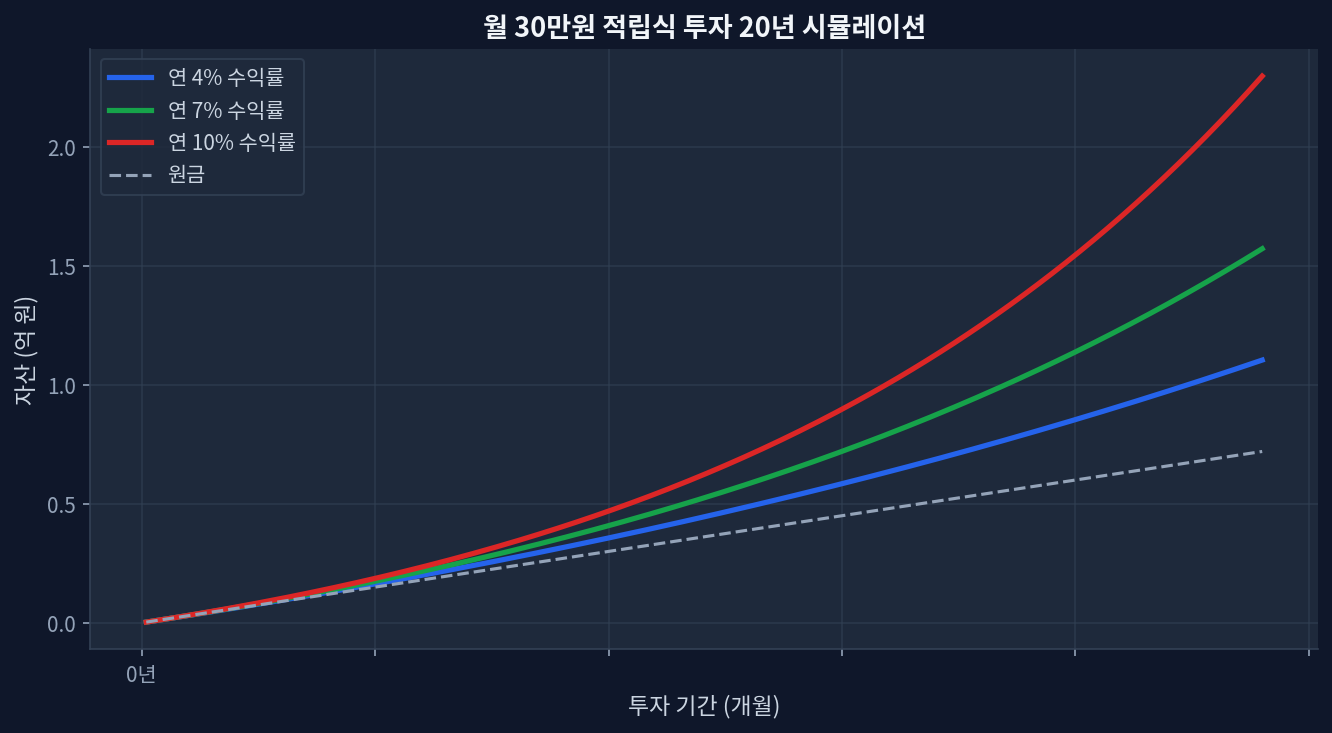
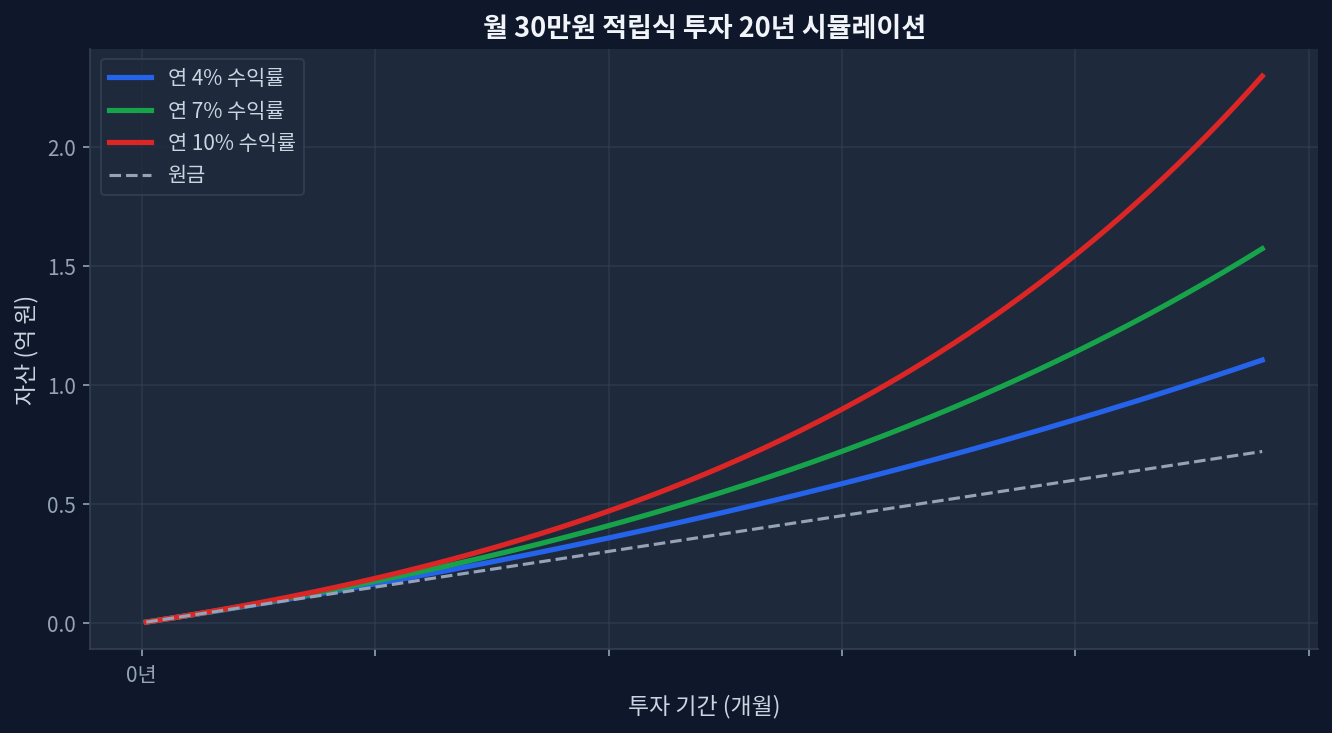
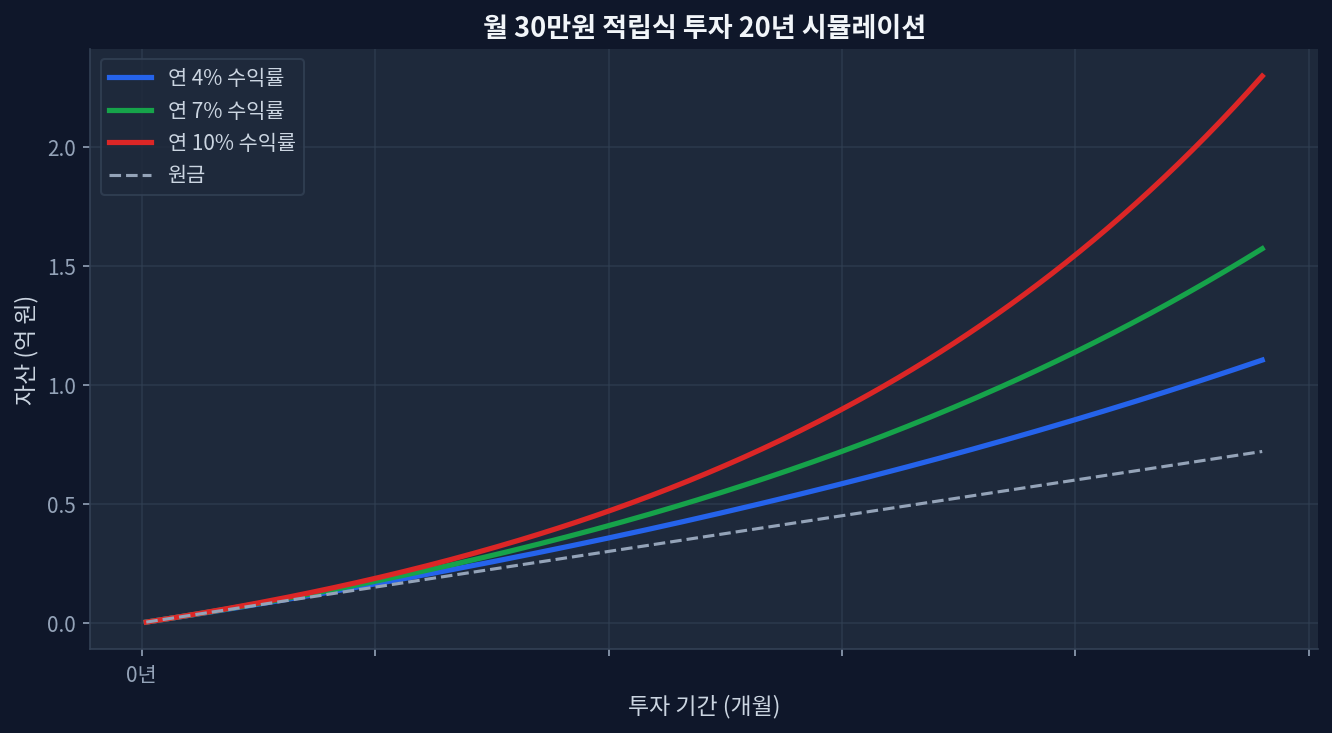
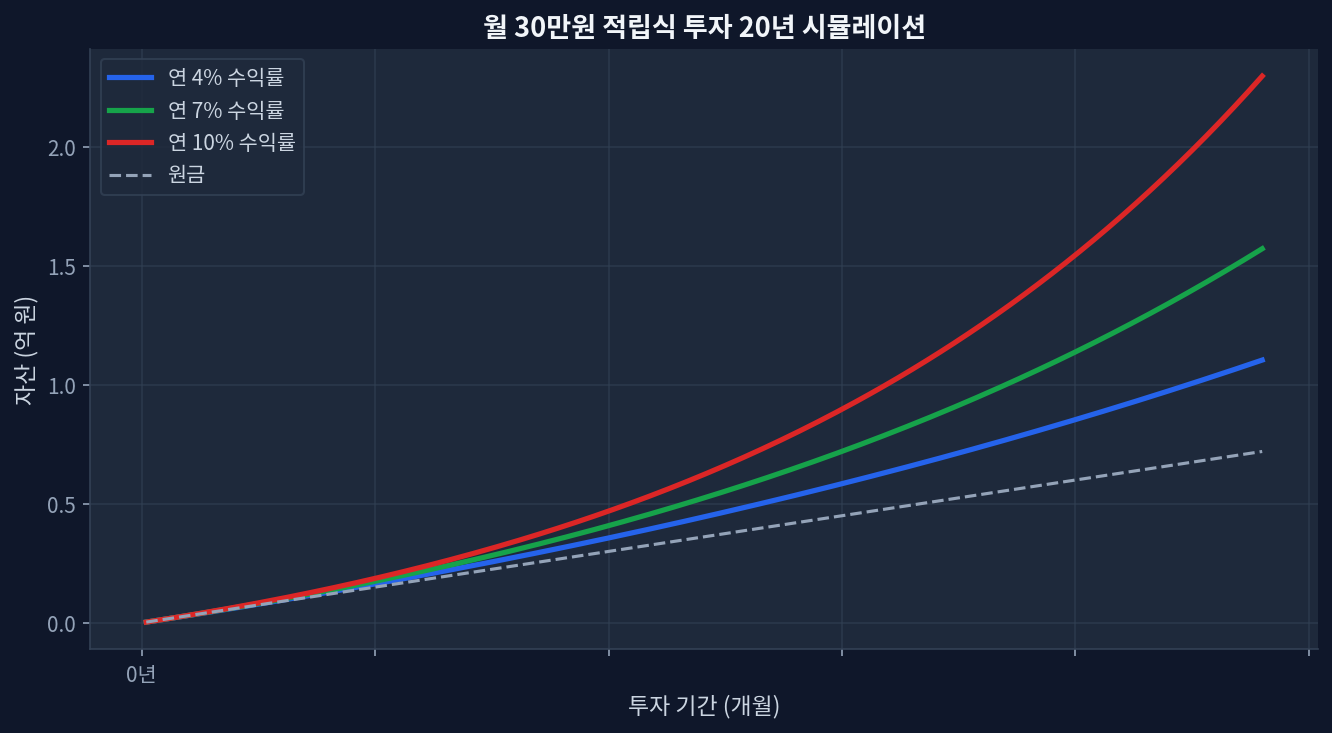
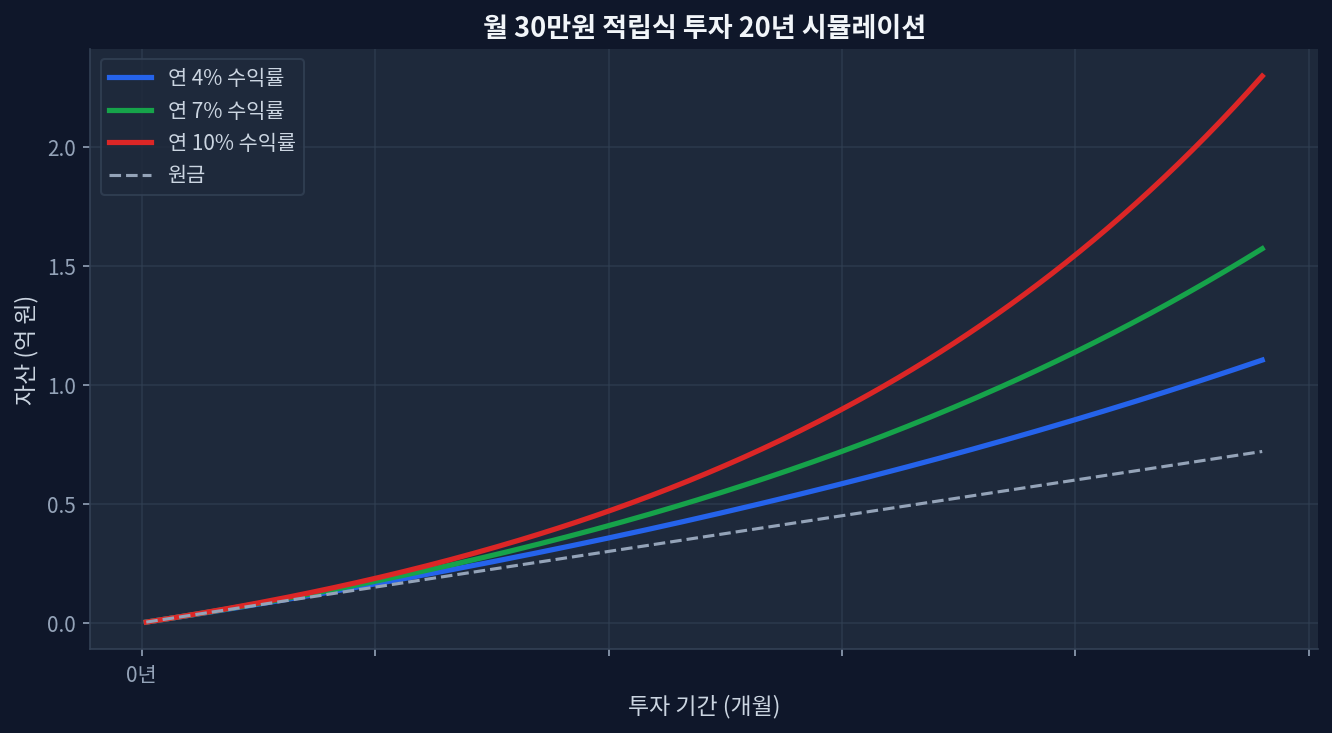
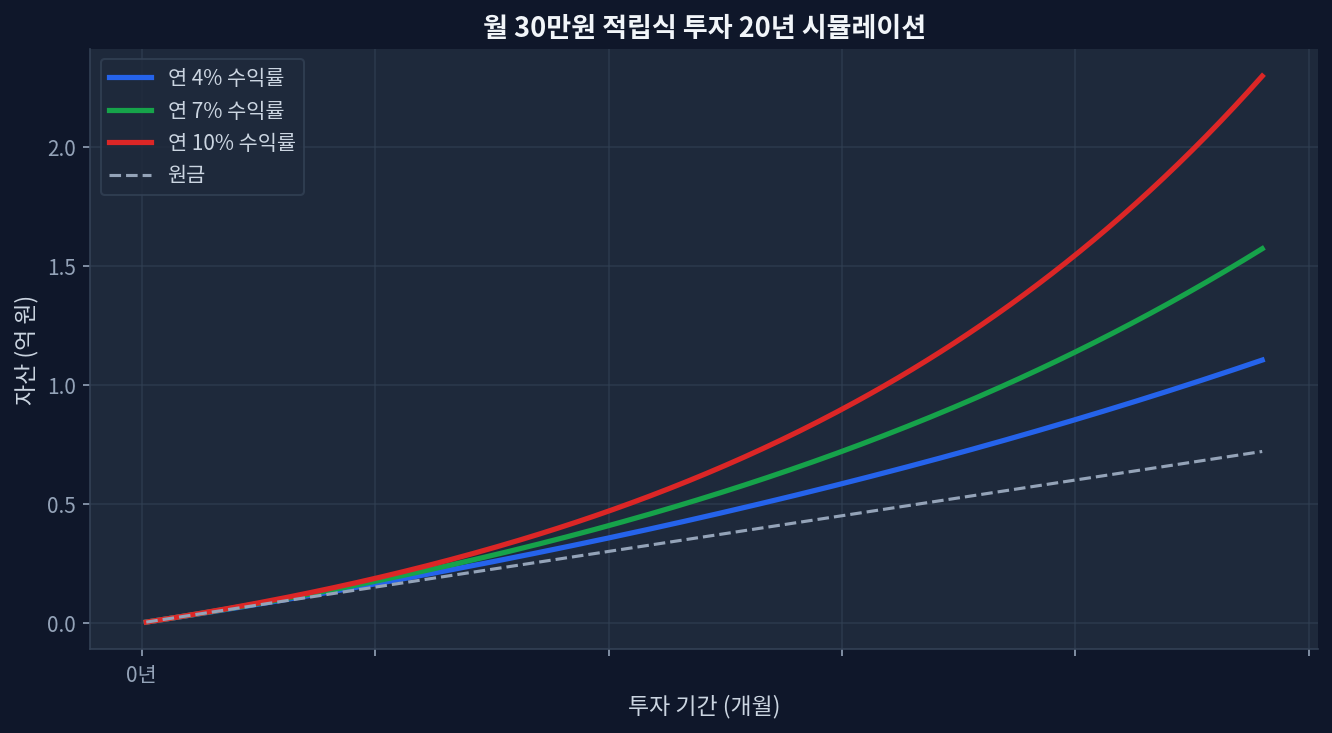
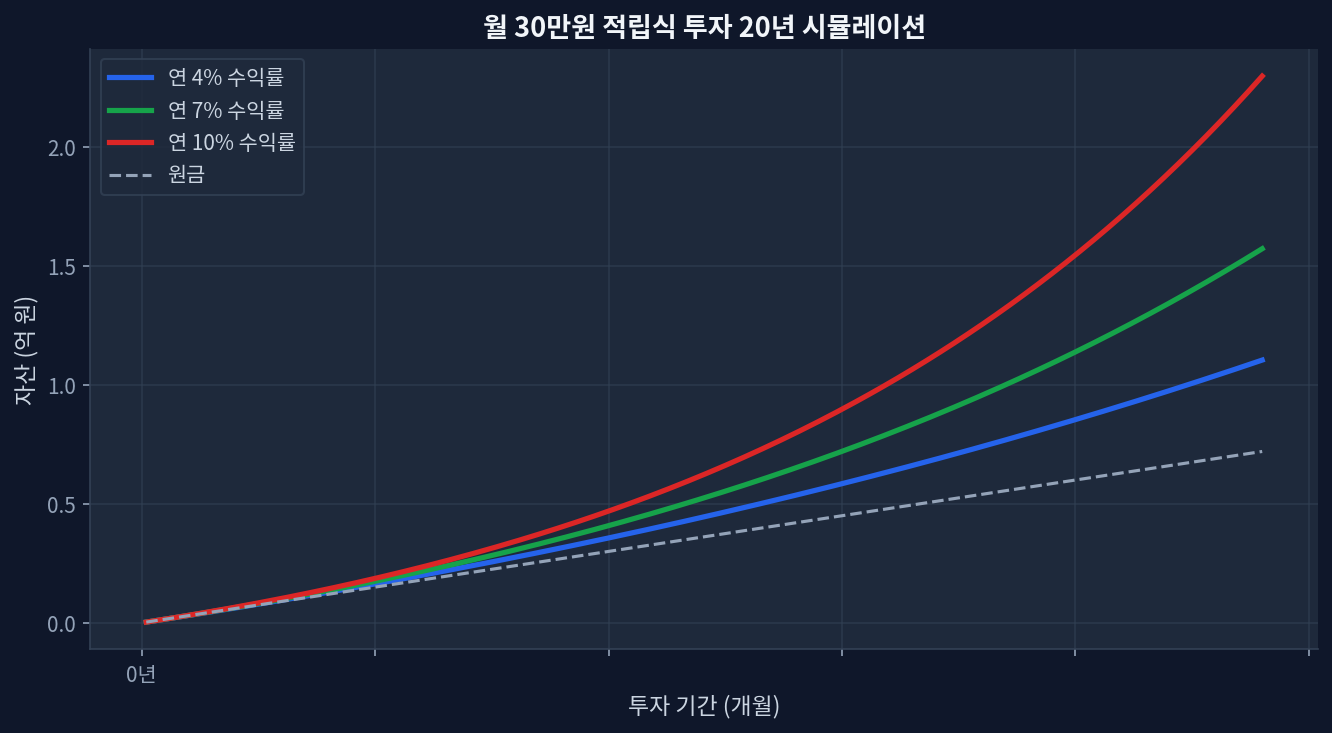
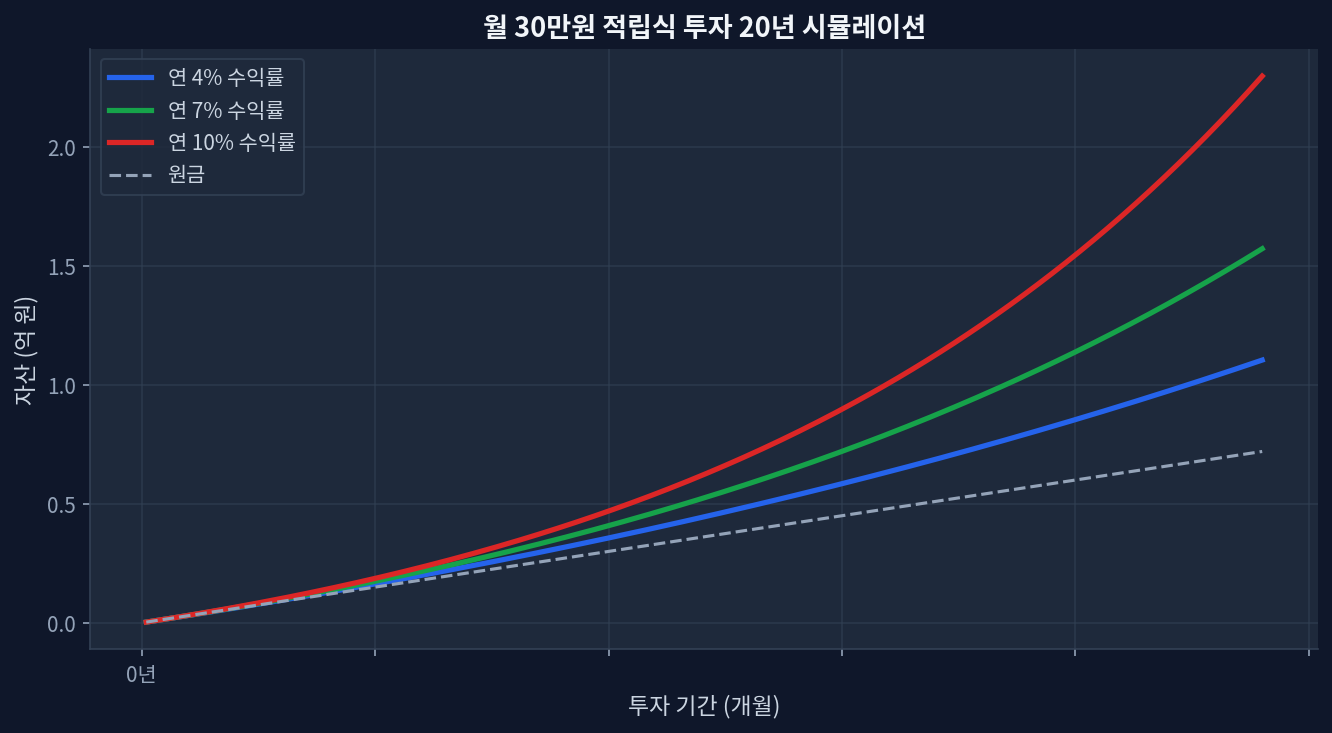
The classic 60/40 portfolio faces secular headwinds, highlighted by BND's stagnant 5-year return of +0.0%. TLT's deep -27.8% 5-year drawdown challenges the assumption that long-duration bonds always hedge equity risk. Current yield profiles (BND at 3.93%, TLT at 4.57%) present a yield-versus-duration risk tradeoff. Rebalancing strategies must account for the high correlation observed between stocks and bonds since 2022. The Stagnation of the 60/40 Portfolio: A 10-Year Bond Data Analysis Monthly $30K investment 20-year compound growth simulation Looking at the automated chart below representing a 20-year monthly $300 investment simulation at 4%, 7%, and 10% annual yields, the compounding effect is profound....

May 20, 2026 · InvestIQs Research
2024 401(k) Contribution Limits: Tax Bracket Impact Simulation & Volatility Risks

2024 401(k) Contribution Limits: Tax Bracket Impact Simulation & Volatility Risks

The 2024 401(k) contribution limit rose to $23,000, altering marginal tax exposure for the 24% and 32% brackets.Pre-tax contributions act as a volatility hedge against current high tax rates, deferring liability to a historically uncertain future bracket.Data indicates the 2020-2026 CAGR stood at 12.3% for major US indices, accelerating the tax cliff risk at RMD age.This diverges from the market narrative on maximizing pre-tax accounts blindly without considering post-2025 legislative tax hikes....

May 19, 2026 · InvestIQs Research
The Hidden Traps of 20-Year DRIP Simulations: Risk and Volatility Anal

The Hidden Traps of 20-Year DRIP Simulations: Risk and Volatility Anal

A 20-year compound growth simulation of Dividend Reinvestment Plans (DRIP) introduces severe tracking errors during drawdown phases. Expense ratios and tax drags act as critical hidden risks frequently omitted from long-term backtesting models. The variance in downside protection between high-yield ETFs (SPYD) and dividend growth ETFs (SCHD) drives a cumulative return divergence exceeding 30%. The 20-year compound interest simulation utilizing a Dividend Reinvestment Plan (DRIP) serves as a persistent marketing instrument within the asset management industry....

May 19, 2026 · InvestIQs Research
Roth IRA vs Traditional IRA: 5-Scenario Capital Gains Tax Decomposition

Roth IRA vs Traditional IRA: 5-Scenario Capital Gains Tax Decomposition

Upfront tax on Roth IRA contributions acts as a drag during prolonged market drawdowns, altering the break-even horizon. Traditional IRA deductions reinvested into taxable accounts can outperform Roth in bracket-compression scenarios. Asset location—placing VTI in Roth and BND in Traditional—adds approximately 40-60 bps of tax alpha annually. The 2020-2026 CAGR of US equities heavily skewed recent analyses toward Roth, hiding sequence-of-returns risks. The Core Mechanics of IRA Taxation Monthly $30K investment 20-year compound growth simulation The chart below shows a 20-year simulation of a $300 monthly investment (4%, 7%, and 10% annually)....

May 18, 2026 · InvestIQs Research
Volatility and Risk in Monthly Dividend ETFs: The Yield vs. Total Retu

Volatility and Risk in Monthly Dividend ETFs: The Yield vs. Total Retu

JEPQ recorded a 10.33% dividend yield and a 78.0% 3-year cumulative total return, demonstrating a strong outperformance trajectory in a high-volatility market environment.JEPI yielded 8.29% with a 1-year total return of only 8.5%, exposing the structural risk of covered calls where returns are compromised by upside capping.Empirical data supports that underlying asset P/E valuations and volatility (VIX) regime shifts are the core factors determining long-term total return, rather than superficial high dividend yields....

May 18, 2026 · InvestIQs Research
20-Year DRIP Reinvestment Simulation: Risk Data vs. Consensus Assumptions

20-Year DRIP Reinvestment Simulation: Risk Data vs. Consensus Assumptions

$1,500/month at 7% DRIP CAGR over 20 years = ~$782K; at 4%, ~$550K — a $232K gap driven entirely by the assumed return rateEvery 1% shift in assumed return adds or removes ~$110K–$130K in terminal value at year 20; sensitivity is nonlinearTax drag in taxable accounts reduces effective reinvestment yield by 15–25%; account type is a primary, not secondary, variable2020 S&P dividend cuts (~14% aggregate quarterly reduction) pushed realized DRIP rates 200bps below model assumptions for high-yield ETFsDRIP reinvestors during the Q1 2020 drawdown outperformed non-reinvestors by 12–18% by year-end — a volatility effect flat-line models ignore entirely What the 20-Year Simulation Data Actually Shows Monthly $30K investment 20-year compound growth simulation Running $1,500/month at 4%, 7%, and 10% for 20 years produces a divergence that widens sharply in the back half of the period....

May 17, 2026 · InvestIQs Research
QYLD and the 8% Dividend Trap: What Five Years of Total Return Data Actually Shows

QYLD and the 8% Dividend Trap: What Five Years of Total Return Data Actually Shows

QYLD delivered ~21% total return (2020–2024) vs. SPY's ~96% — a 75-point gap the 10%+ yield never bridges.Covered call distributions tax as ordinary income; at the 22% federal bracket, after-tax yield on QYLD falls to ~8% before NAV erosion.JEPI (0.35% ER) posted ~55% total return since May 2020 inception vs. QYLD's ~21%, with partial qualified-dividend treatment.Account placement dominates ticker selection: QYLD inside a Roth IRA eliminates the ordinary-income drag entirely.Disconfirming scenario: sustained VIX above 25 expands covered call premiums and improves QYLD's yield-vs-NAV trade-off materially....

May 16, 2026 · InvestIQs Research
SCHD Dividend Growth Rate: 10-Year Trajectory — Separating Myth from Data

SCHD Dividend Growth Rate: 10-Year Trajectory — Separating Myth from Data

SCHD current price $31.72, dividend yield 3.29% — trading at 93.6% of 52-week range ($25.69–$32.13), effectively at multi-year highs1-year return +24.7% outpaces VIG +17.9%, but 5-year cumulative stands at SCHD +48.2% vs VIG +62.7% — a 14.5pp total-return gap favoring VIGDividend yield: SCHD 3.29% vs VIG 1.51% — a 2.2x spread, material for cash-flow-priority investorsP/E: SCHD 18.8 vs VIG 26.6 — lower valuation for SCHD reflects sector composition, not a quality discount10-year dividend growth fell to single digits after 2022 rate hikes — the "...

May 16, 2026 · InvestIQs Research
SCHD Dividend Growth CAGR: Yield Decomposition Across 10 Years

SCHD Dividend Growth CAGR: Yield Decomposition Across 10 Years

SCHD current yield 3.29% at $31.8 — 94.9% of 52W range ($25.69–$32.13), not a distressed-entry scenario1Y return +27.0%; 5Y cumulative +47.1% — dividends contributed ~3.3 pts, price drove the restVIG 5Y return +61.9% outpaces SCHD by 14.8 pts — the yield premium has a total-return costSCHD P/E 18.9 vs VIG 26.8 — value tilt is real but concentrated in rate-sensitive sectorsAUM $91.1B, avg daily volume 23M shares — liquidity not a constraint at any allocation size SCHD trades at $31....

May 15, 2026 · InvestIQs Research